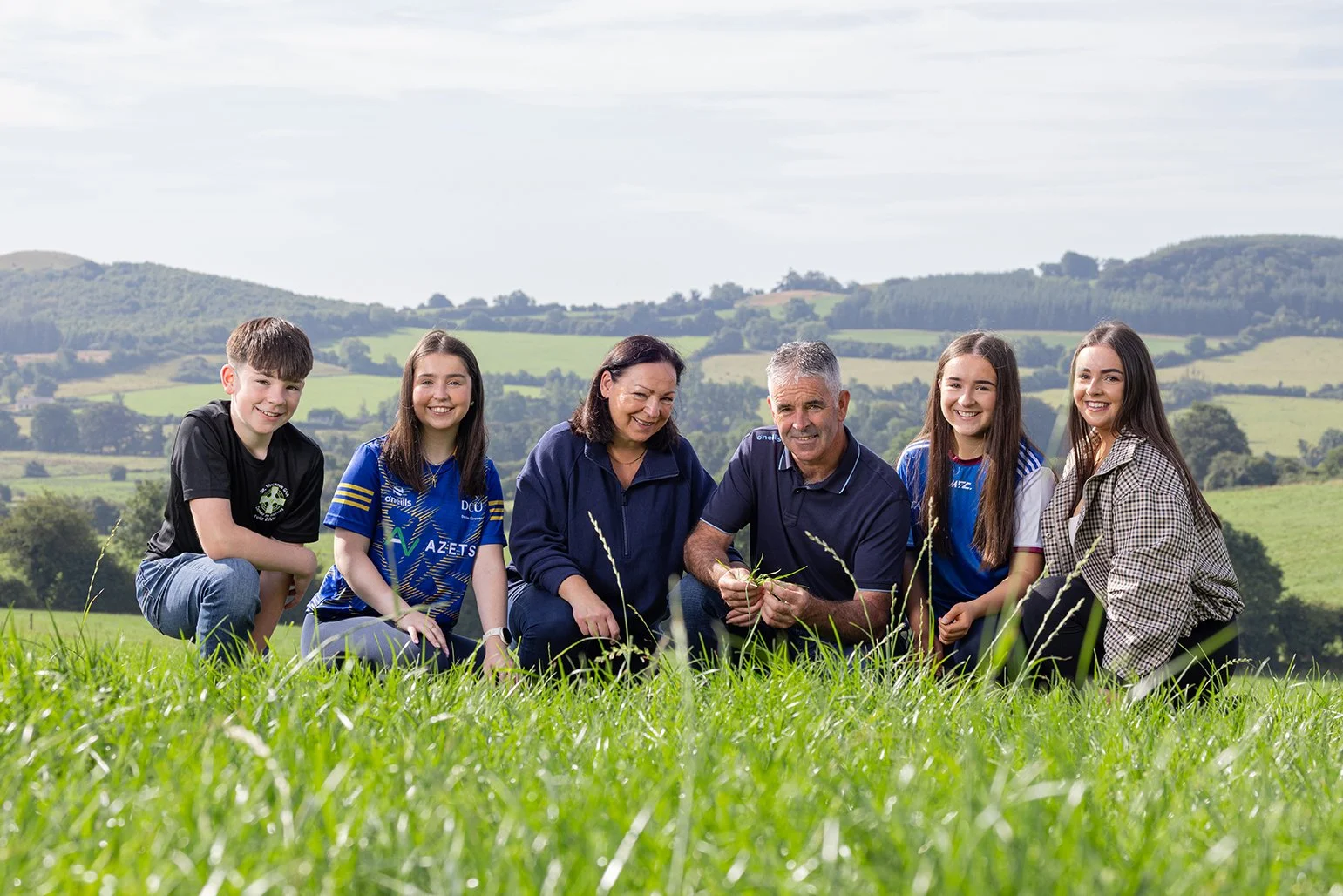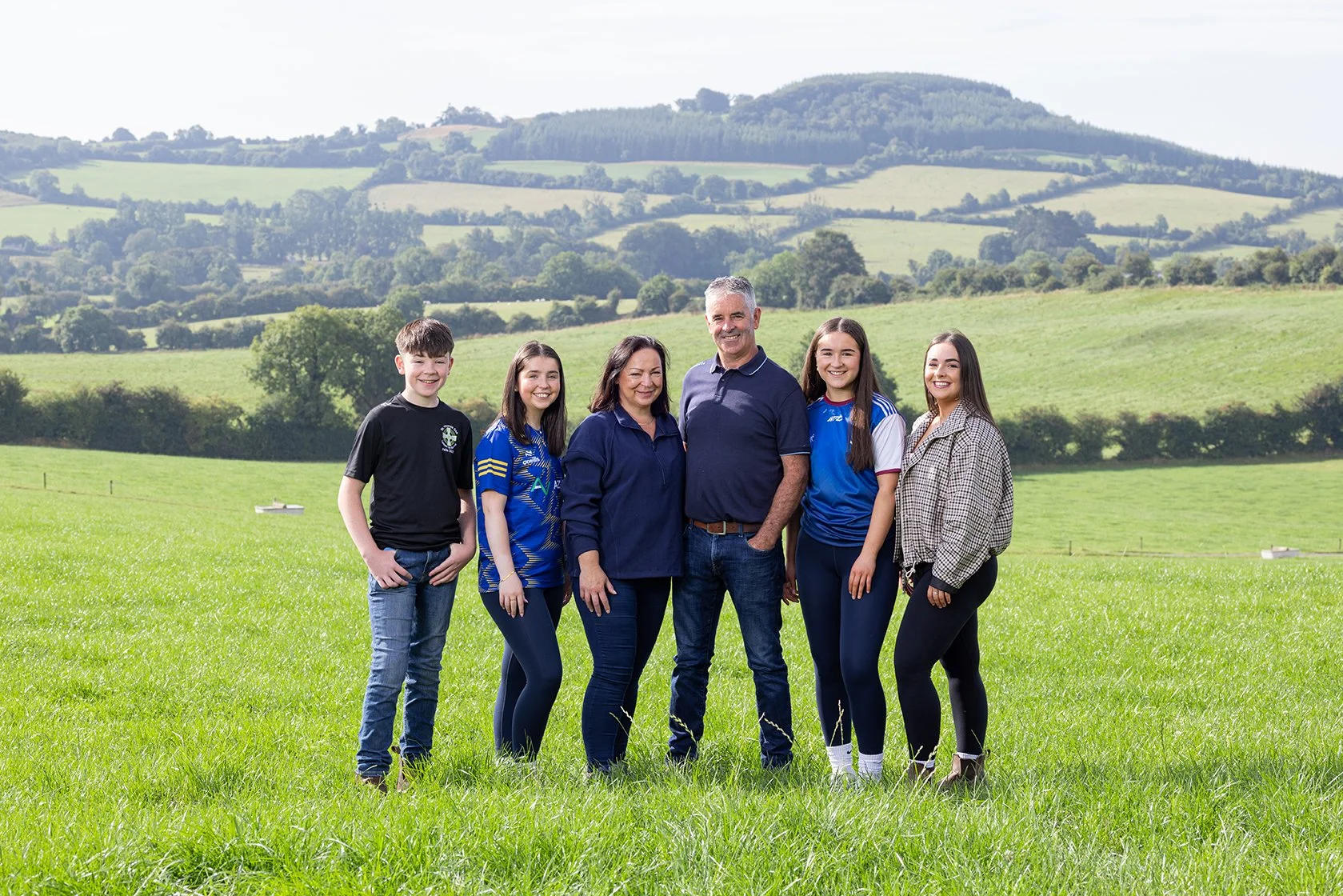
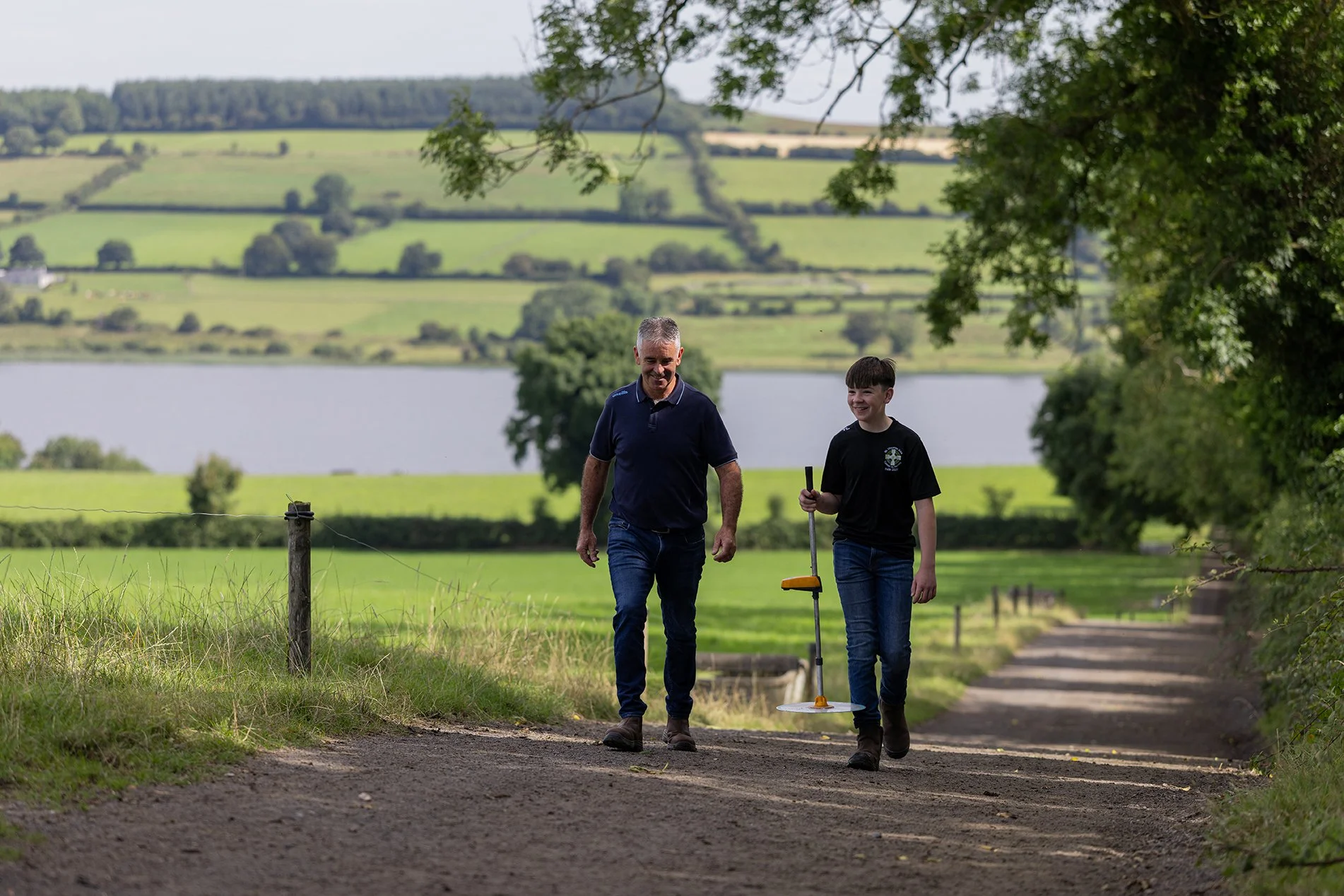
Two cows in the 190-cow Loughrey herd carry a significance out of all proportion to their numbers. They belong to twelve-year-old Tom. His father, Thomas, pays the feed bill and does the work, but the milk cheque, calculated from the cows’ recorded annual yield and the average milk price, is Tom’s. On the day of the judges’ visit, young Tom was as ready as anyone to explain what was happening at each stage of the farm walk. On many farms, succession is a hope for the future. At Ballinredra, it has already begun, two cows at a time.
The arrangement fits a farm where continuity matters. The Loughreys have farmed this ground since 1823. Tomas is the fifth generation, and the fifth Tomas Loughrey, to farm at Ballinredra, and he makes no secret of his ambition: “I hope to pass it on to the sixth.” The setting adds another layer to the story. The farm boundaries Lough Derravaragh, where the Children of Lir are said to have spent 300 years as swans and where real swans still share the shoreline with Loughrey cattle.
This is continuity with momentum, not a farm preserved in time. Thomas took over in 2006, when the herd numbered 60 cows. His father had established the dairy enterprise in the mid-1960s and rebuilt it after a brucellosis depopulation. Following the end of milk quotas, Thomas expanded in stages, first to 90 cows, then 140 and now 190, leasing an additional 36 hectares and constructing two underpasses to join the grazing block safely and efficiently.
Asked what his father liked best on the farm, young Tom answered immediately: “Concrete.” It was funny, but also perceptive. The yard records the farm’s progress in well-planned buildings, sound roadways and clean, orderly surfaces. Thomas’s own explanation is equally direct: “It’s easy to keep things right if you don’t let them slip.” That sentence could serve as the farm’s milk-quality policy.
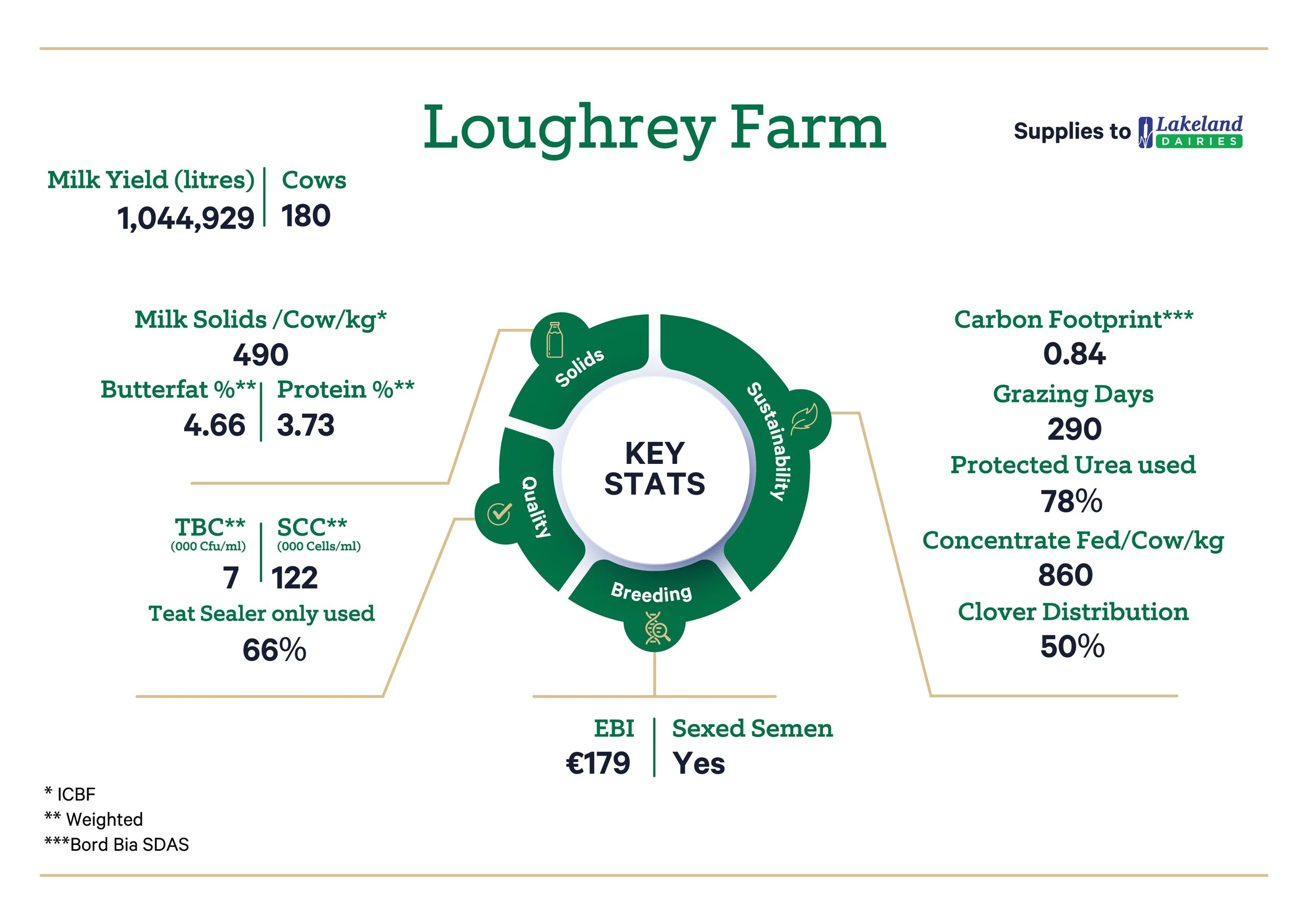
The results come from consistency rather than any single trick. The 2025 average TBC was 7,000 cfu/ml and average SCC was 122,000 cells/ml, while fat and protein averaged 4.66% and 3.73%. The chlorine-free dairy is now washed by a Dairymaster automatic system installed in early 2026. high-cell-count cows when present are milked last, and clusters are disinfected between problem cows. Thomas prefers a foam post-milking teat dip because he can see that it has covered the full teat. Cubicles are limed consistently using a 30% hydrated-lime mix, strong enough to do the job without the operator and udder irritation he associates with full-strength lime.
Milk recording and CMT testing are used to identify the cow and quarter behind a rising cell count. The same evidence-led approach continues at drying off. Two-thirds of the herd received teat sealant only in 2025. First-lactation animals qualify where their average SCC is below 60,000 cells/ml and no test exceeds 150,000; for older cows the corresponding limits are 100,000 and 200,000. Thomas admits that he was sceptical when he began selective dry-cow therapy five years ago. He is now an advocate, but only when cow selection, infusion hygiene and cubicle cleanliness are all right.
Breeding is based on AI, with sexed dairy semen directed to the best cows and heifers for EBI, fertility and milk solids; the remainder are matched to selected beef sires. The male calves have regular outlets to three farmers, whose feedback helps decide which beef breeds to use. The herd averages 3.7 lactations, one cow is milking in her ninth, and only 8% were empty last year. Calves receive colostrum promptly and spend four days on the bottle before moving to automatic feeders. The everyday welfare details are readily visible: ample housing, regularly trimmed tails, routine footbathing and calves on straw bedding and disbudded before ten days of age.
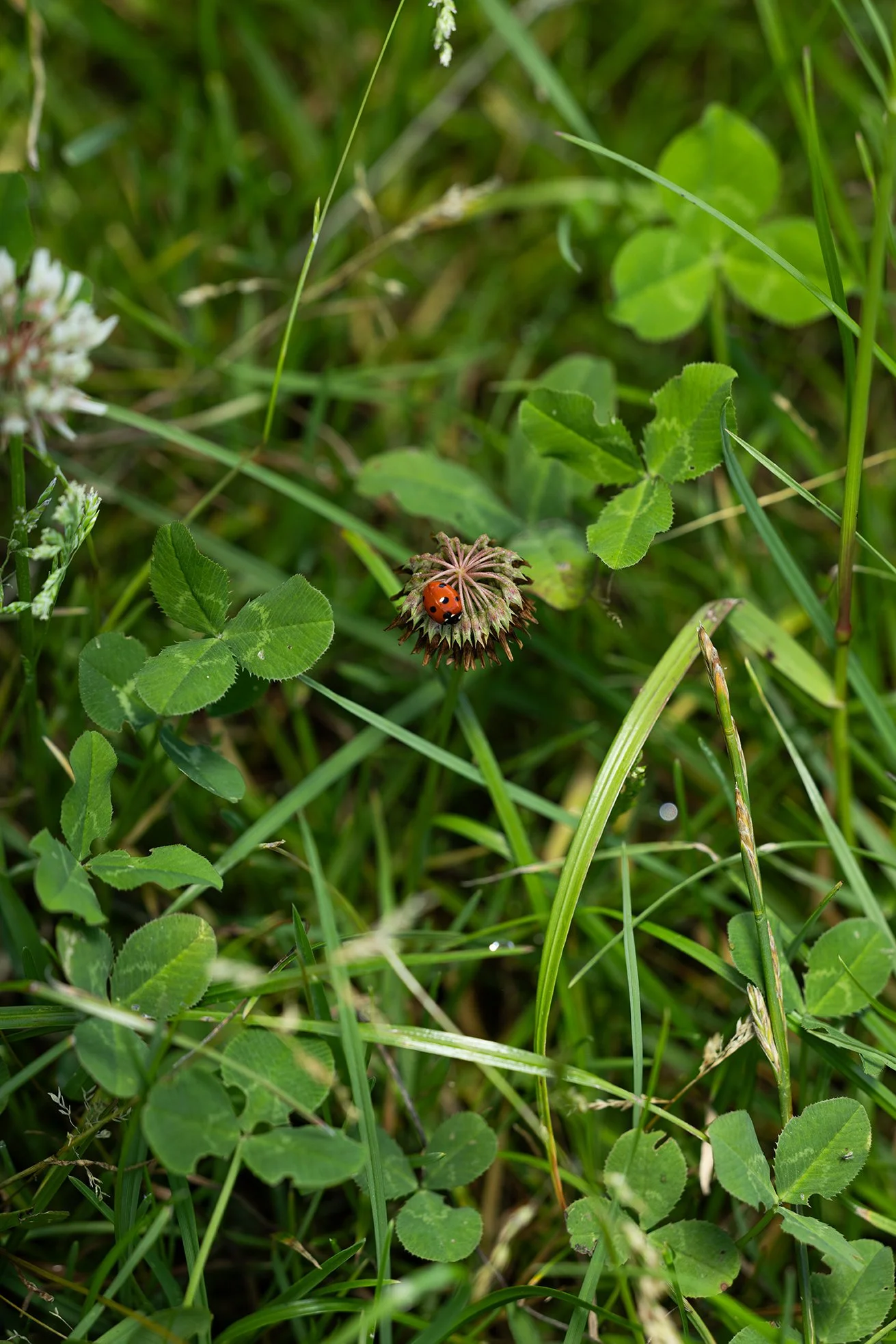
Grass is the engine of the system. Thomas measured it 37 times last year, using PastureBase to turn covers into decisions. Cows are usually out within ten days of the start of calving, at grass full-time by St Patrick’s Day and grazing for about 290 days. Clover is established on 55% of the platform, while soiled water is targeted to the strongest clover swards to reduce chemical fertiliser further. With 78% protected urea, all slurry spread by LESS and 108 tonnes of lime applied in 2025, the farm’s carbon footprint is 0.84kg CO₂e per kilogram of milk, one of the lowest among this year’s finalists.
Environmental work here is not confined to the fields that produce grass. Half a hectare by the lakeshore and 2.5 hectares on the outfarm have been set aside for nature. Two ponds provide habitat for ducks and frogs, 120 metres of new hedge were planted in 2025, and a three-hectare critical source area has been fenced and managed through an EIP project using water bars, a sediment trap and controlled drainage. The family have also welcomed a wider catchment-restoration initiative focused on the River Gain at the outfarm.
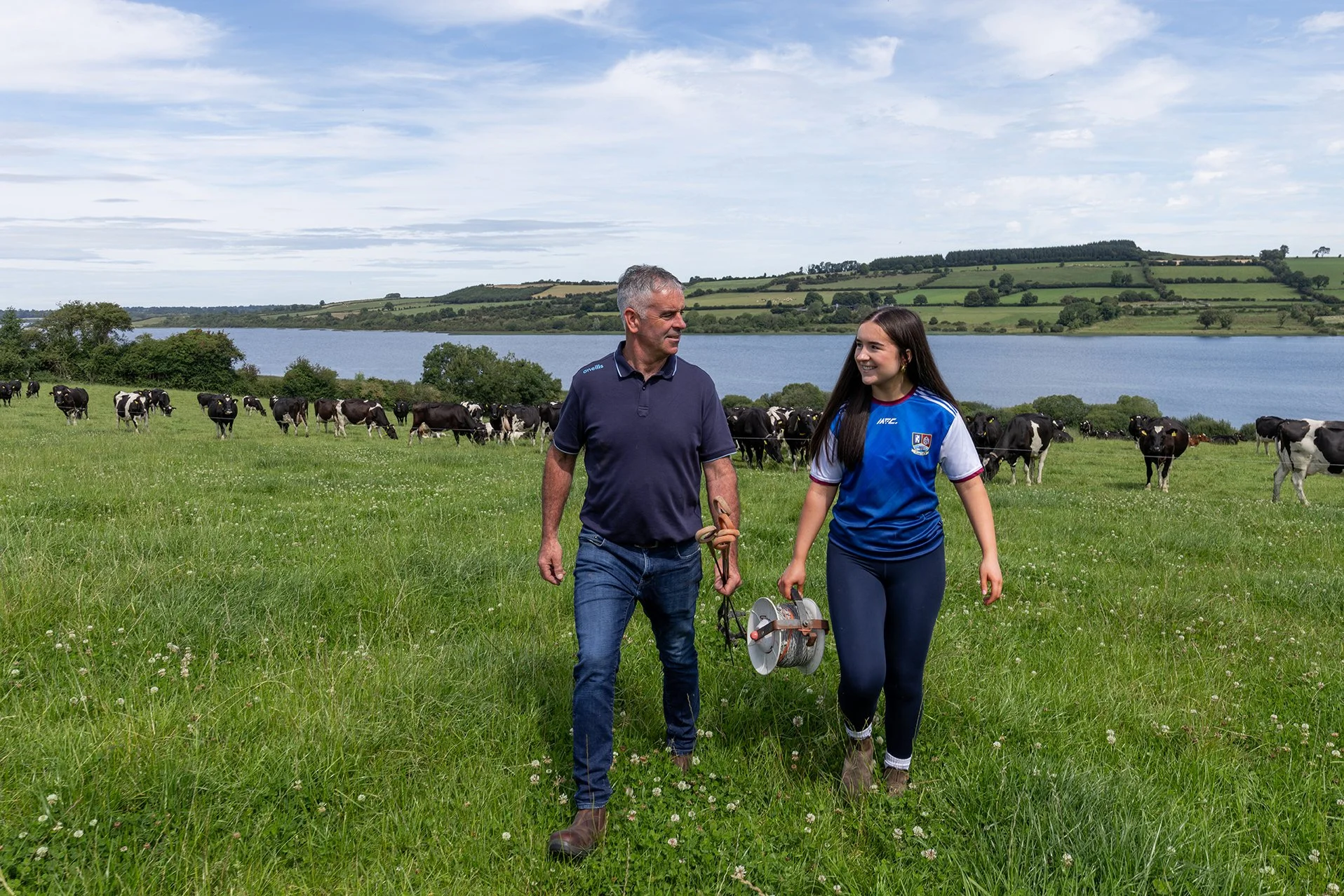
The farm is unmistakably a family enterprise. Margaret keeps the administration moving. Emer, newly qualified as a primary teacher, Hazel, who is training to be a primary school teacher at DCU, and Claire, who hopes to study agriculture, all help with calves; Claire and Tom also take turns in the milking parlour. Willie, the full-time employee, completes the team. The Loughreys’ achievement is not simply that five generations have remained on the same ground. It is that each generation has left the farm more capable for the next. On the evidence the judges witnessed, the swans of Derravaragh will have Loughrey cattle for company for many years to come.