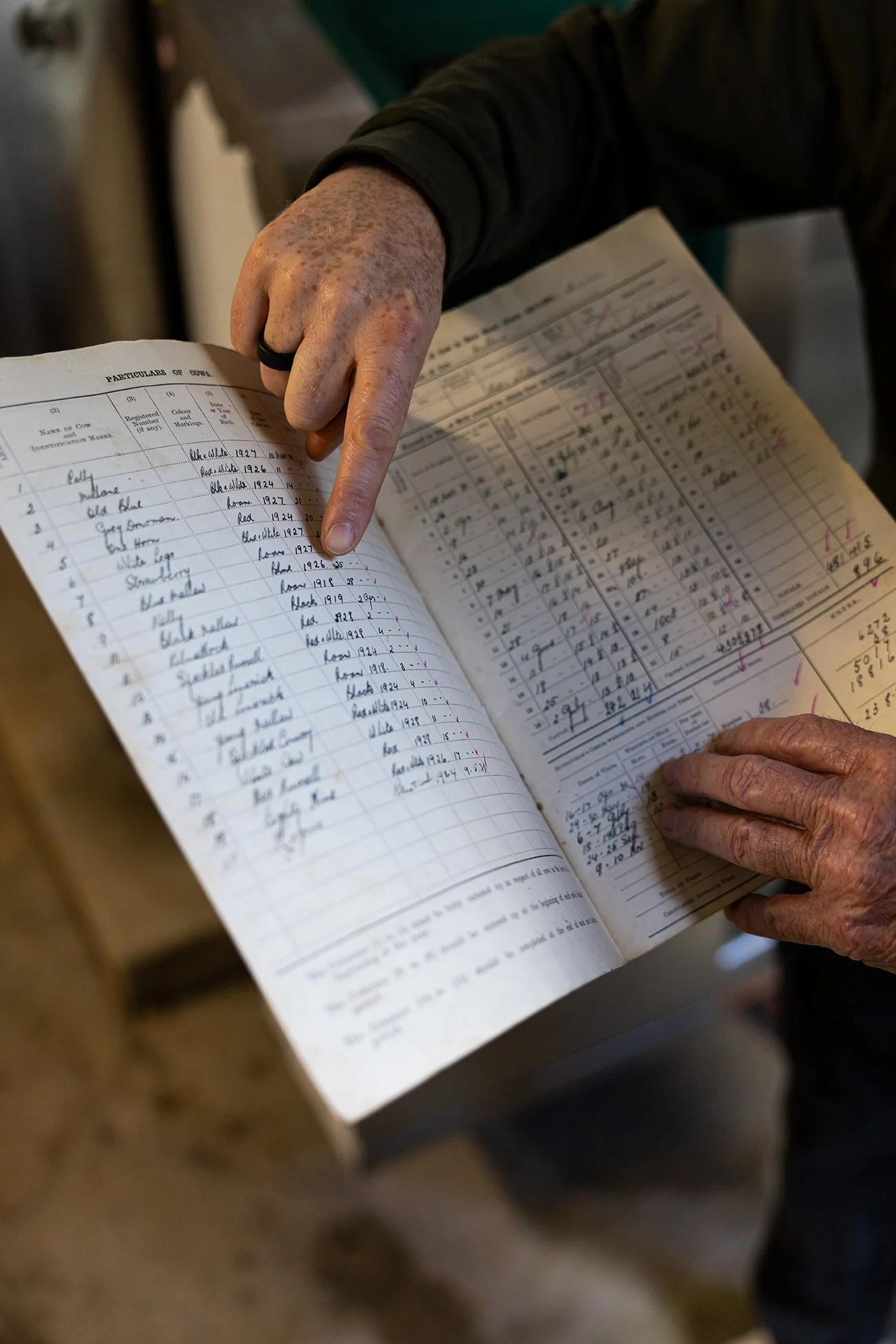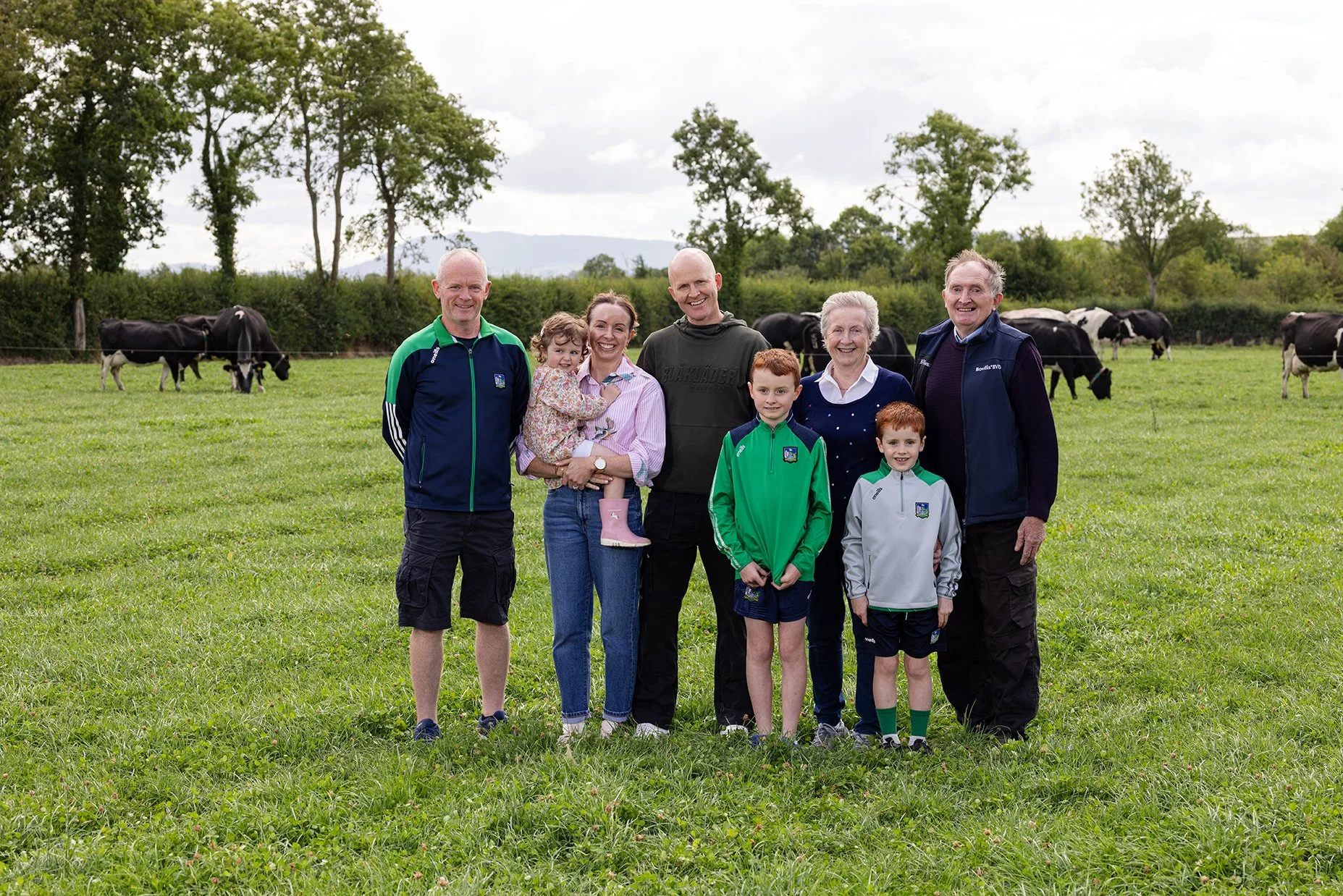
On the wall of the milking parlour at Coolruss hangs a milk-recording sheet dated 1931, a year the Carrolls sent milk from a Shorthorn herd down the road to the creamery at Granagh. Ninety-five years later the same family is still writing down what each cow gives, still chasing the next small improvement, and that sheet on the wall tells you most of what you need to know before a single cow is milked. Michael Carroll farms here in partnership with his father Martin and mother Mary, the fifth generation on the holding; with his wife Stephanie and their three young children, Donagh, JJ and Eliza, about the place, three generations work the yard between them. It is a calm holding, run by a calm man, and the ease between father and son is the first thing a visitor notices.
Michael came to farming by a roundabout road. A qualified quantity surveyor, he spent nine years in construction and an autumn in New Zealand before the pull of home won out. “It’s great to be your own boss,” he says, “but you have to love farming and I do.” His father Martin grew up here and still minds the dry stock and does the lighter tractor work; Michael’s mother Mary takes care of the calves through the spring; and between them the generations share the load so easily that no one seems to be in charge and everything still gets done. The children are never far from the action and although young they help out where they can and love the farm.
That 1931 instinct to measure is now the farm’s sharpest tool. The herd is milk-recorded four times a year with Munster Bovine, and Michael treats the figures as the farm’s eyes. “The information from milk recording is fantastic,” he says, using it to find the one cow lifting a cell count long before she shows up as a clot in the filter. The detailed picture provided by milk recording is also central to Michael’s breeding strategy, allowing him to base breeding decisions on each cow’s proven performance.
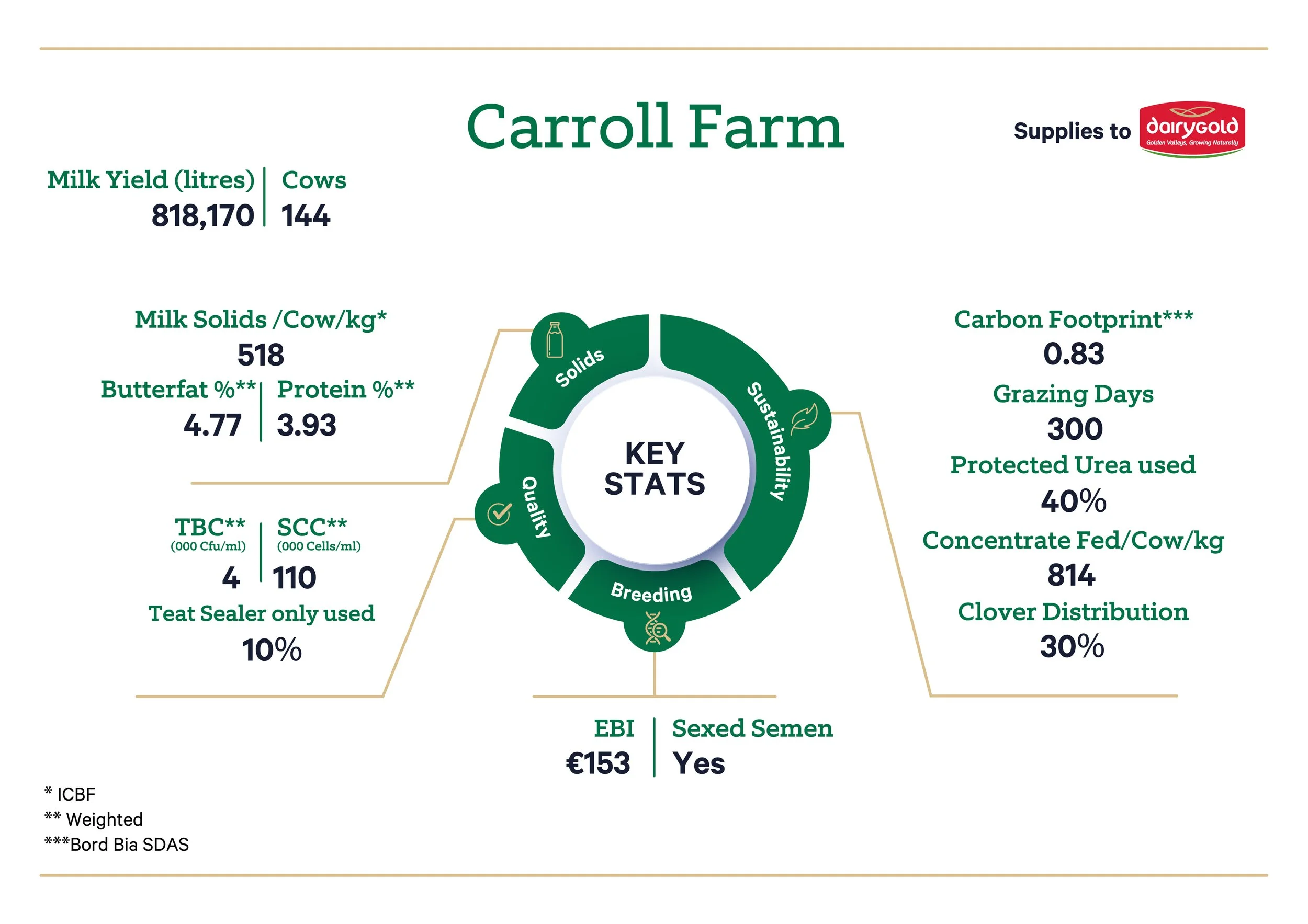
The 20-unit GEA parlour has automatic cluster removers, an automatic wash and a water softener to improve cleaning efficiency. Nedap GEA cow collars feed an automatic drafting system. The reward for consistent attention to detail shows up in the tank, the herd delivered 518kg of milk solids per cow in 2025 off 814kg of meal, and Michael’s stated ambition, “five and four”, 5% fat and 4% protein, is really the Shorthorn-to-Friesan improvement of the last century carried one step further.
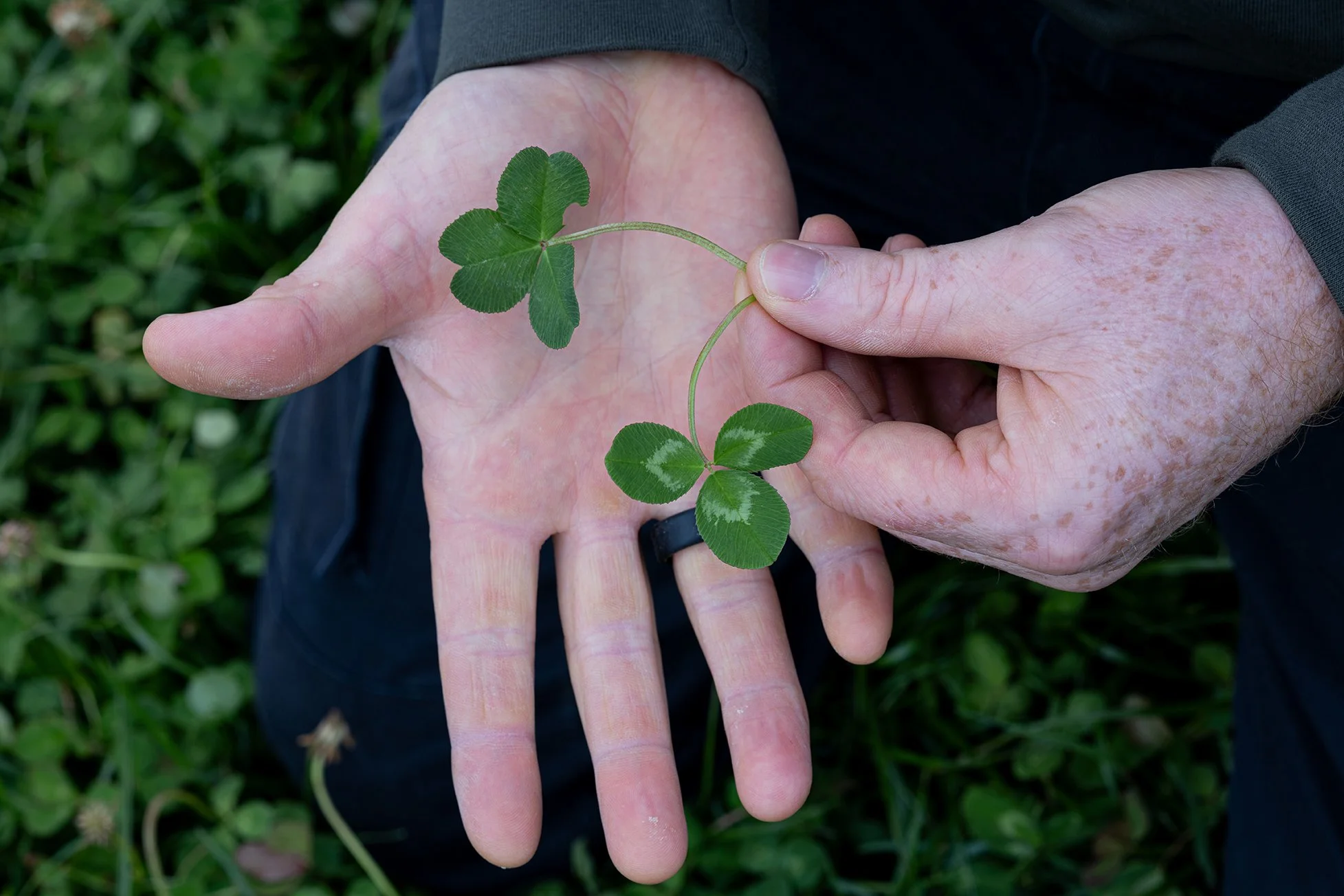
Ask Michael the secret and he does not mention cows. “Make yourself have an interest in grass,” he says, and he does, eyeballing covers into PastureBase more than 30 times a year. The Carrolls use spring and autumn rotation planning and reseed about 10% of the farm annually. Clover is established across approximately 30% of the grazing platform. Multi species was tried but the chicory and plantain did not last. All the nitrogen is protected urea, slurry goes out through a dribble bar, and every drop of grey water is collected and spread from March to October. Lime does the quiet heavy lifting, 41 tonnes of it in 2025, “a great return on the investment” and the farm’s carbon footprint sits at 0.83kg of CO₂ equivalent per kilo of milk, low by any measure and lower each year by design rather than accident. Cows recorded 300 days at grass, a considerable achievement on a wet farm. The approach is methodical: correct the soil, retain the nutrients and ask the sward to do more of the work.
The target is not simply more cows, but more useful output from the cows already present. Michael's stated destination is “five and four”, milk at 5% fat and 4% protein, alongside tighter calving, stronger grass utilisation and concentrate held close to its present level. It is an efficiency strategy expressed in the language of milk solids rather than expansion.
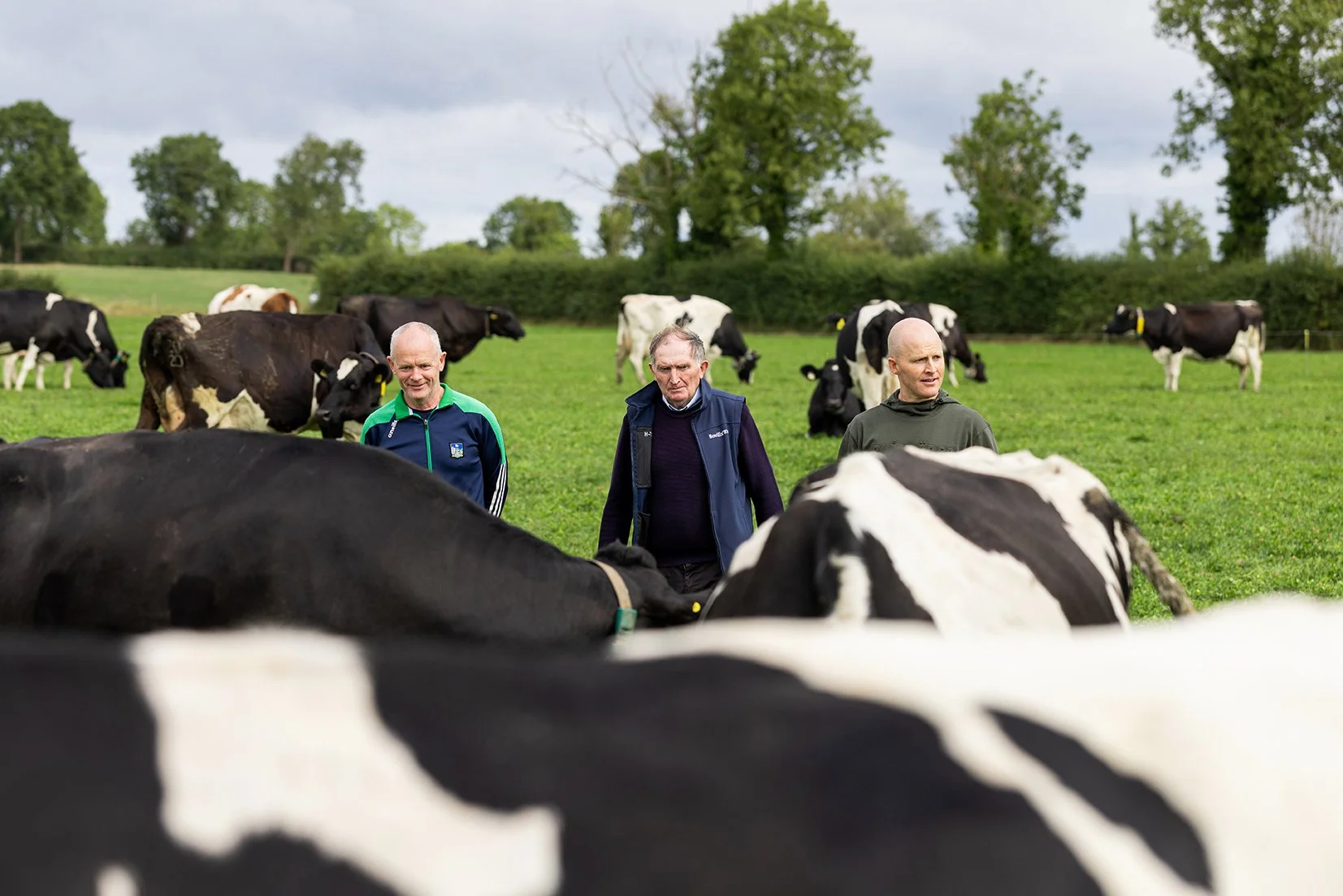
The breeding policy is equally specific. The cows have an EBI of 153 and replacements already up at 189. He genotyped the entire herd some years ago and now breeds straight off the data. Daughter-proven bulls are selected with emphasis placed on fat and protein rather than milk volume alone; a sire is rejected if his dam has not performed above the herd average. He also uses genomically tested bulls, In 2025, 90% of the animals selected for dairy breeding received sexed semen, with Jersey used sparingly on larger cows. Easy calving beef sires are used on the balance. There is a fifth of Jersey blood in the herd for solids and a handful of Norwegian Reds for hardiness. Watching a big-framed cow amble past, Martin offers the old verdict that still holds, “the Holstein was the vet’s best friend, he says, but the Shorthorns were never sick’. In the middle of all the genomics, it is a reminder of what the family has always bred for. Dairy stock knowledge also runs through the wider family: Michael's brother Pat is a dairy livestock specialist with Grasstec. The aim is a fertile, productive cow suited to the farm rather than an animal bred for a single headline figure. Michael's target for milk composition sits within that wider design: higher solids must come with health, fertility and the ability to perform efficiently from grass.
Good farms are not farms without problems; they are farms that learn quickly when problems arise. Summer scour was the principal herd-health challenge in 2025. The response for 2026 was practical and specific: access to hay, more controlled grazing on older pastures, avoiding turnout before calves are ready and greater care around weaning. Newborn calves receive colostrum immediately under the '1-2-3' system, calf mortality is reported below 5%, and herd health is supported through vaccination, faecal testing and participation in the Munster Bovine programme bulk tank herd health screening scheme.
Selective dry-cow therapy is increasingly being used with the intention of growing that proportion as confidence and evidence allow. The current threshold is never having a SCC above 80,000. It is a sensible feature of the Carroll approach: progress is welcomed, but only when the management underneath it is strong enough to carry it.
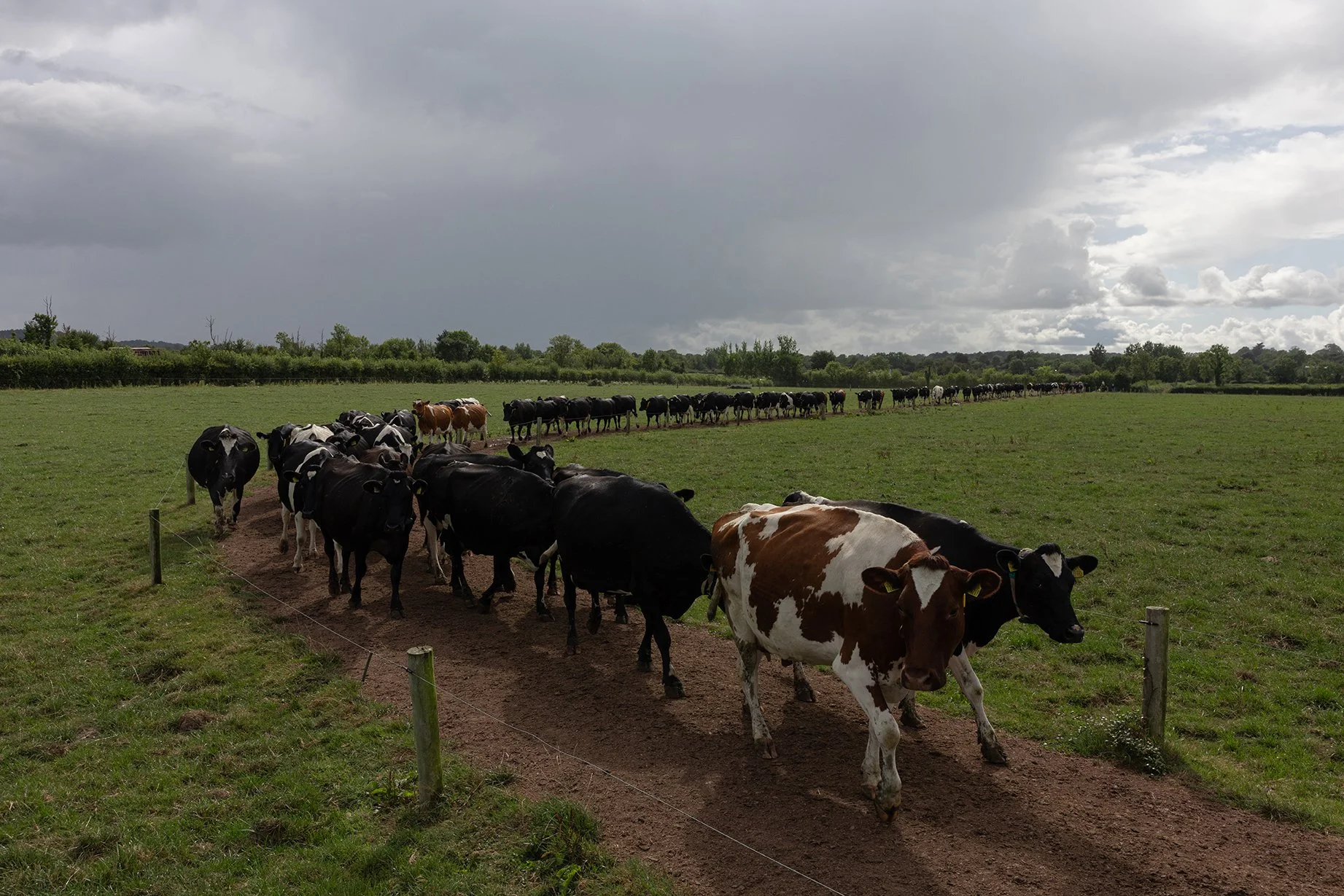
One of the farm's most modern feature may be the way labour is treated. Ollie O'Brien, a neighbour, has worked full-time with the Carrolls since 2019, milking and carrying out tractor work. Outside the busiest spring period he works a five-day week, receives eight weeks of annual leave and has December off. Clodagh Hartigan, a Leaving Certificate student who is hoping to study veterinary, undertakes some of the relief milking. Contractors handle silage and reseeding, with relief milkers used when required.
Michael aims to finish by 6pm, leave only essential work for weekends and take a two-week family holiday in summer. Stephanie himself and the kids were heading to Centreparks a few days after the judges visit.
With 201 cubicles for cows and heifers, ample slurry storage and strong infrastructure, capacity is kept ahead of pressure. Organisation allows the farm to perform without making permanent demands on everyone around it.
Free time is put to good use. Michael coaches under-8 and under-10 teams with Granagh-Ballingarry GAA, serves on the club's finance committee and the local parents' association, and represents the Grange region on a Dairygold regional committee. Through the Farmer Time programme, he also brings the farm into Dublin classrooms by live video, explaining agriculture and answering children's questions.
Environmental care follows the same pattern of steady accumulation. Watercourses, drains and ditches are fenced; roadways are cambered; water is recycled in the milking process; and farm plastics and cardboard are recycled. The family plants about 15 trees and 100 whitethorn plants each year, retains established trees and provides bird and owl boxes. Solar panels are the planned next step.
Together, these measures reveal a farm that understands improvement as repetition: test the soil again, measure the grass again, plant the next hedge and review the next milk record. The 1931 sheet shows that attention to detail is not a recent practice on this farm, it is an inheritance Martin and Michael are actively renewing.
Coolruss is strong by every technical measure, but its deeper achievement is the balance between continuity and change. Martin's experience remains useful, Michael's ambition remains open to evidence, and Ollie makes the system stronger. The records on the wall look back across ninety-five years. The farm they guide is facing firmly forward.