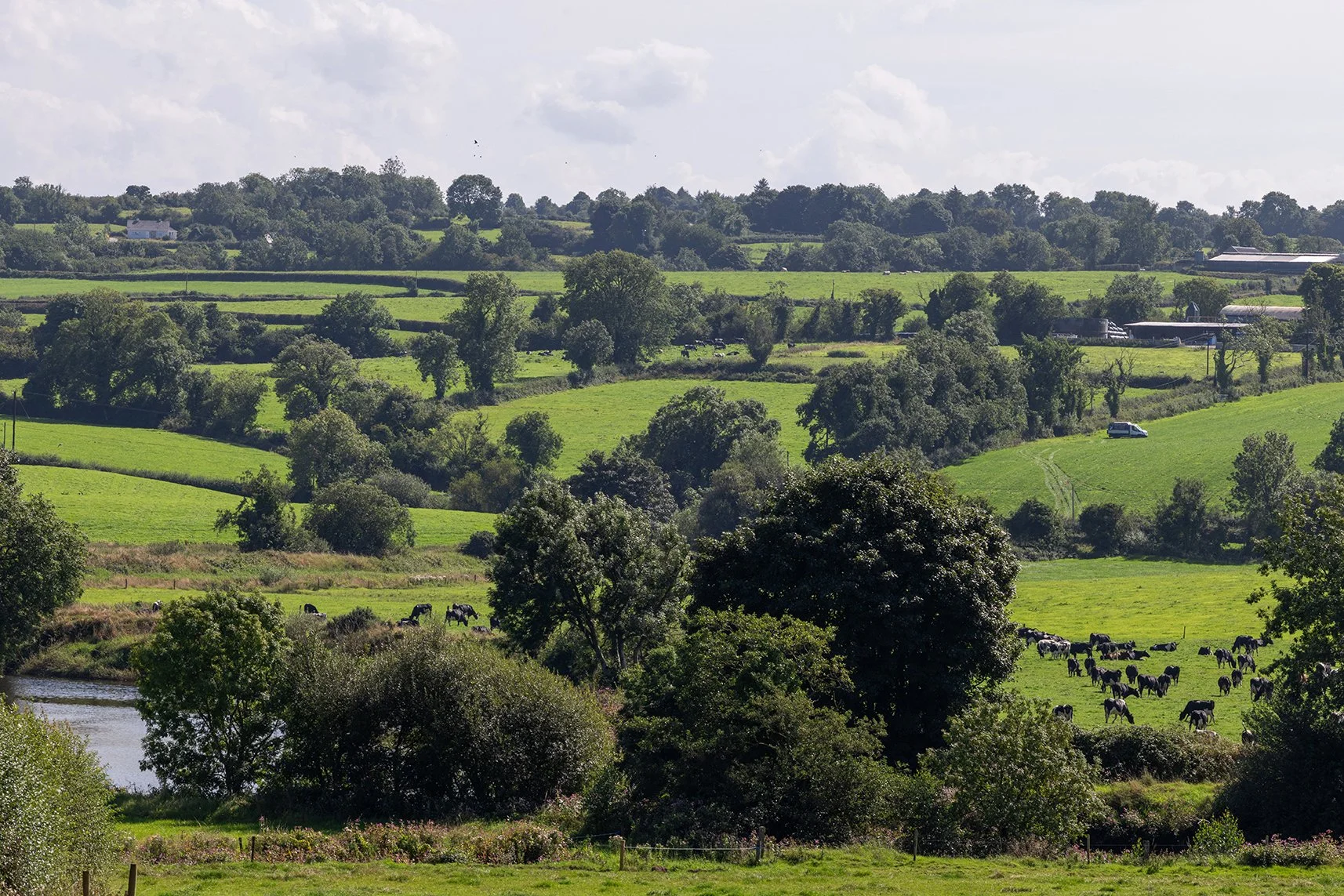
There cannot be many milk collections in Ireland with a shorter journey to the dairy. Waterwheel Farm runs to the edge of Aurivo's Killygordon processing site and, as Patrick Kelly jokes, they could nearly run a pipe between the two. Yet while the milk may not travel far, the influence of this Donegal farm has reached well beyond the Finn Valley.
The connection with the co-operative movement is almost as old as the farm itself. The Kelly family has worked at Ballyarrell for more than 200 years, and Patrick's great-grandfather was the first vice-chairman of Finn Valley Co-op in 1898, part of the lineage from which the modern dairy business developed. Patrick's father helped establish Donegal's first dairy discussion group in 1990. Patrick has carried that instinct for collective progress onto the national stage - first through Macra na Feirme, where he became national chairman, and later through the Teagasc Authority, Donegal Creameries, Progressive Genetics and ICBF. He served for 12 years on the ICBF board, eight of them as vice-chair.
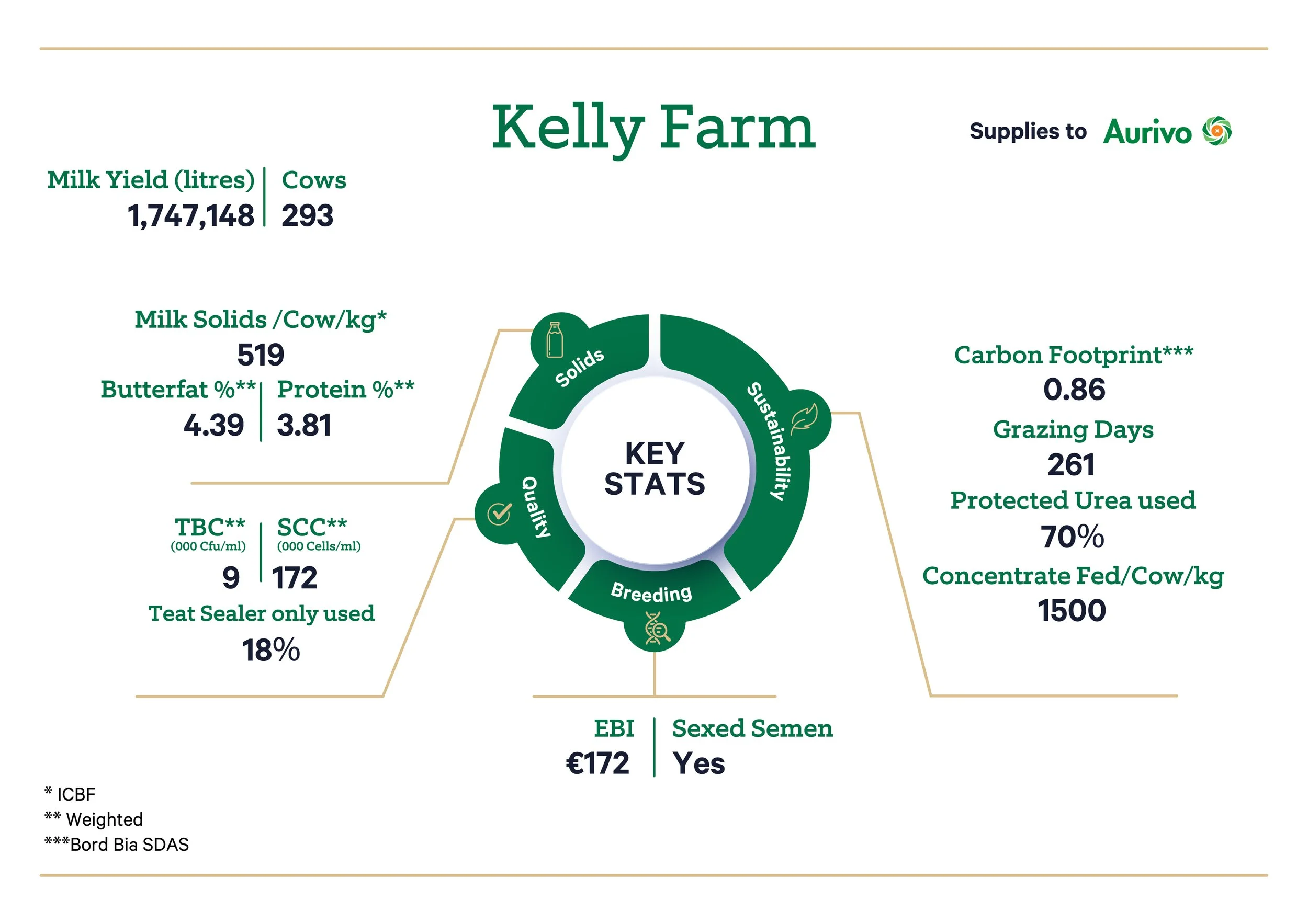
That wider contribution matters, but Waterwheel's claim to represent Aurivo begins with what is happening at home. Patrick milks 280 high-EBI Holstein Friesians on 145 hectares, supported by his brother-in-law Mark Sammon and Thomas Doherty. The herd delivered 150,484kg of milk solids in 2025, or 519kg per cow, while also supplying a small winter milk contract. The 2026 milk-quality figures are particularly impressive: somatic cell count fell to 91,000 cells/ml in March and 77,000 in April, while total bacterial count has generally remained around 9,000 to 12,000 cfu/ml.
Perhaps the most persuasive part of the Waterwheel story is that Patrick does not pretend those results arrived without a challenge. Cell count had been the farm's most stubborn problem, including Staphylococcus aureus infections and intermittent shedders. The response was systematic. Milk recording five times a year identifies suspect cows; the California Milk Test traces the affected quarter; samples are cultured and sensitivity-tested; high-cell-count cows are kept separate; clusters are flushed between cows; and cases that do not resolve are managed by drying off a quarter or culling where necessary. A Bobman improved cubicle hygiene, the milking plant was checked closely, and the extra space provided by the new housing reduced pressure on cows. It was not one dramatic intervention, but a disciplined chain of decisions, followed through until the figures changed.
The same care is evident in antibiotic stewardship. In 2025, 18% of the herd was selected for teat sealer only at drying off. Patrick began cautiously, using milk-recording history to exclude any cow that had shown a cell-count spike and arranging enough help so that no more than one row was treated at a time. Of the 50 cows selected, 48 calved without a problem. Mastitis samples are cultured so treatment can be targeted rather than automatic. Calf mortality in 2025 was zero, and Friesian bull calves are sold privately to repeat buyers who value the start they have received.
Cow comfort is built into the physical farm. A major shed completed in 2022 brought total accommodation to 400 cubicles for about 360 cows and heifers. It provides light, airflow, wide passages, generous feed space and several crossing points, reducing competition and allowing cows to move naturally. Roadways have been resurfaced with hoof health in mind, and cows are allowed to come to the parlour calmly in their own time. The drafting gate may be Patrick's favourite piece of equipment, but the real asset is a layout that makes the right routine easier for both animal and operator.
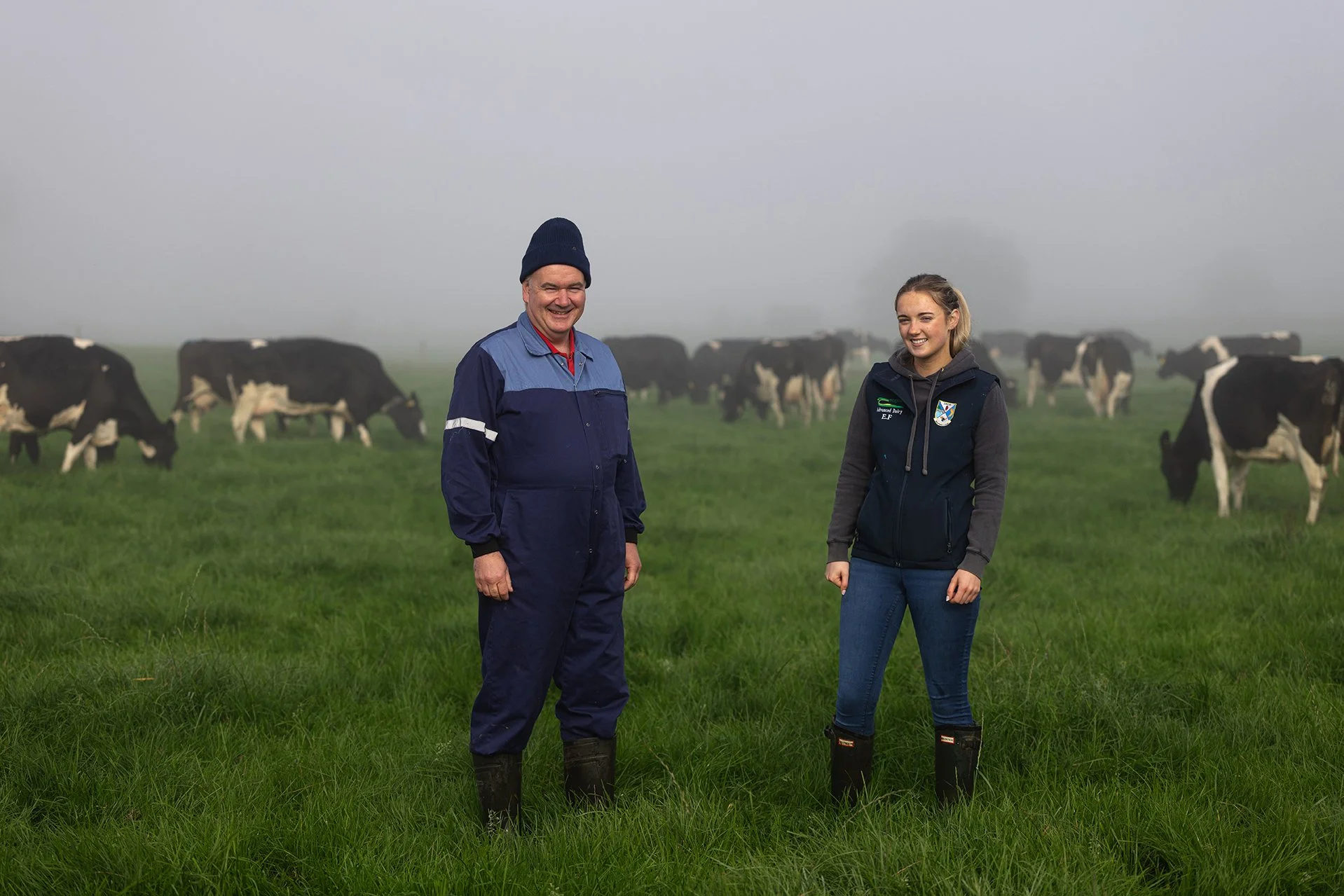
Waterwheel is equally strong beyond the yard. The River Finn, a Special Area of Conservation, runs along the farm. Its banks have been fenced with a five- to ten-metre margin and planted with 3,000 native birch, rowan, willow, alder and oak. Some roadways were moved away from watercourses and others were resurfaced to fall away from drains. Slurry and soiled-water capacity exceeds the legal requirement by a full month, allowing nutrients to be applied when crops can use them rather than when tanks dictate. Low-emission spreading, protected urea, annual soil sampling, 40 grass walks a year and precision fertiliser application all contribute to a carbon footprint of 0.86kg CO2 equivalent per kilogram of fat- and protein-corrected milk, an excellent result for a herd of this scale that also carries a winter contract. A 62kW solar array with battery storage now helps power milking and milk cooling.
The next target is not more cows. Patrick is reducing stocking pressure so that more ground can be reseeded and the herd's genetic potential can be expressed through better grass allocation. His aim is to sell the same volume of milk from fewer cows. Replacement heifers have an EBI of 208 and the 2026 calves average 227. An 18-bull genomic team spreads risk while continuing genetic gain, and Patrick retains some conventional dairy breeding because, through his industry roles, he recognises the need to keep producing potential AI bulls for the national herd.
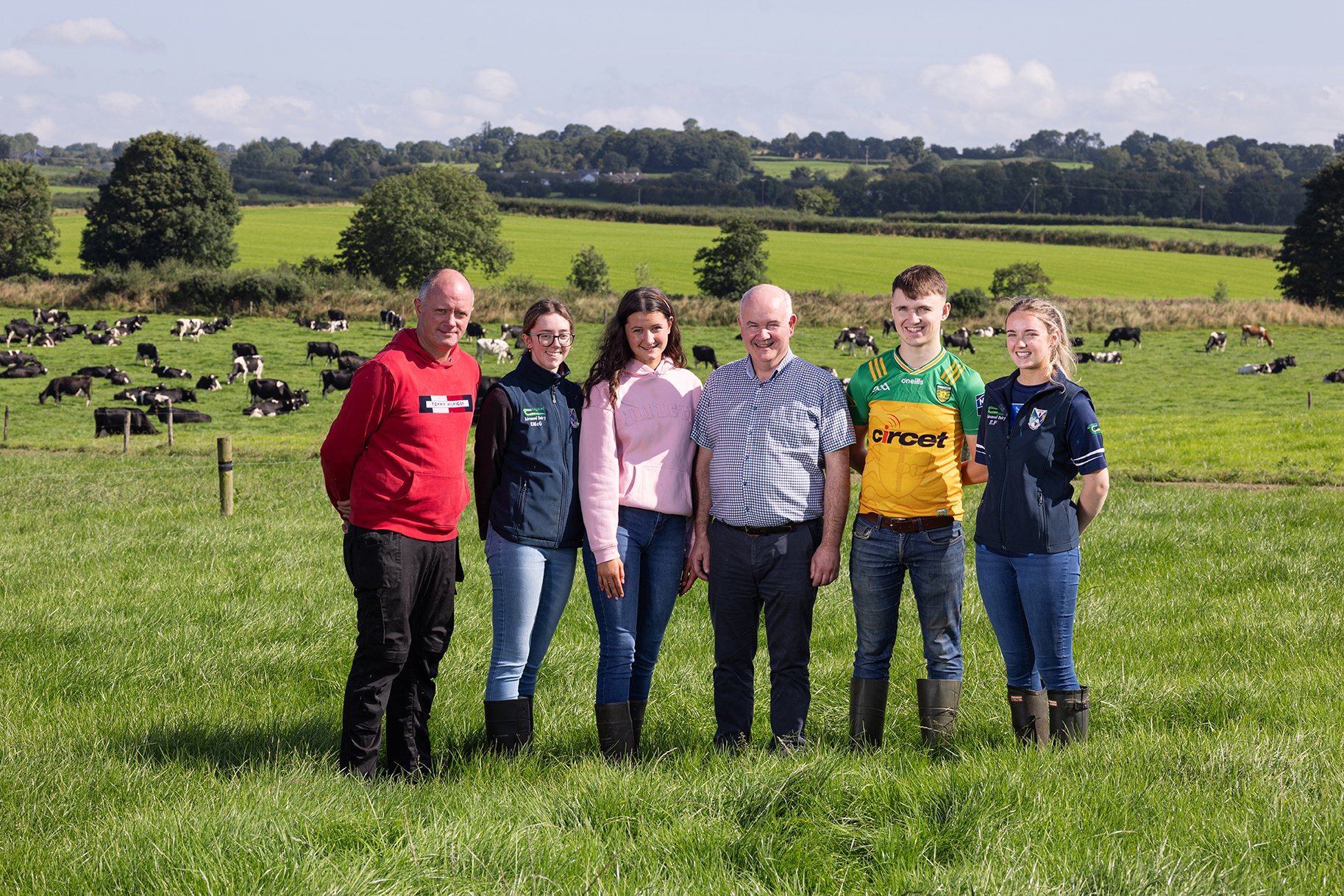
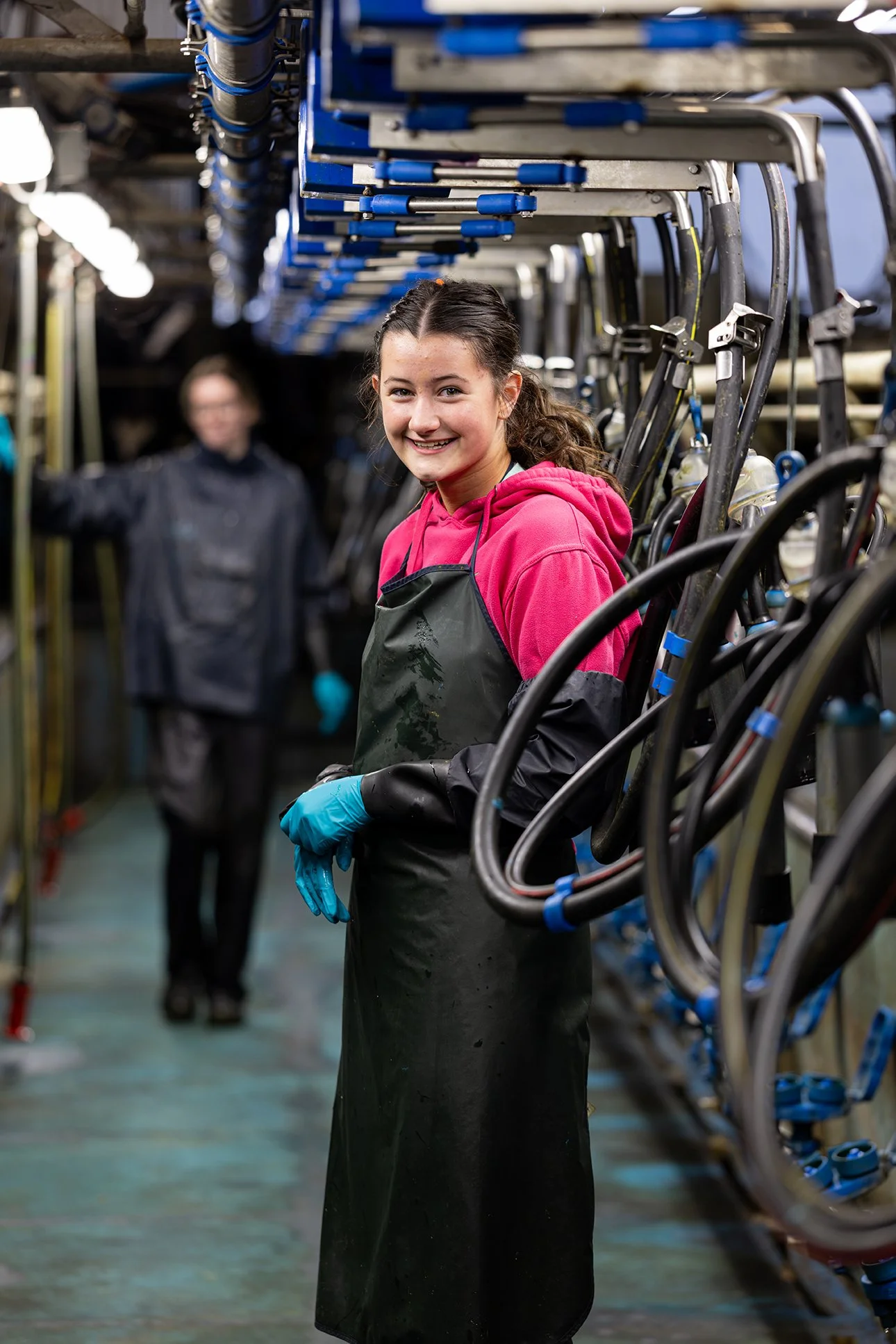
Waterwheel also invests in people. Patrick's Dad as an employer retained one member of staff for 54 years; today the farm employs two full-time workers, Patrick’s brother in law Mark Sammon and Thomas Doherty and he regularly takes students from Ballyhaise Agricultural College and ATU Letterkenny. Patrick guest lectures on genetics and hosts students for practical classes, while local schoolchildren are invited to see how milk is produced. Up to ten people can step in to milk when required, and the normal working day finishes at 5pm so employees keep their evenings for family, farming at home or GAA. That combination of good facilities, dependable routines and respect for people's time is one reason staff and students want to be there. The home house is surrounded by a beautiful garden ably tended by his mother Kathleen. His Dad Patrick is now retired but is still keeping a close eye on things and is a good sounding board for future plans and is surrounded by his grand kid one of whom serenaded the judges with classical music on the piano over lunch.
Patrick studied agricultural science at UCD, gained experience on farms in the Netherlands and France, and then spent a year working in New Zealand and Australia. When he returned, he established a separate dairy herd to secure milk quota before later merging it with the home enterprise. The farm has changed enormously since then, but his enthusiasm has not become complicated. 'The reason I am farming,' he says, 'is that I love farming.' At Waterwheel, that love is expressed in clean milk, comfortable cows, protected water, opportunities for young people and years of service to the industry beyond the gate. The milk has only a short road to travel; Patrick Kelly's contribution reaches much further.