If you want to understand the Buttimer farm, don’t begin in the milking parlour. Begin in the calf shed. There is no sting of ammonia and no damp bedding, just clean straw, warm milk and the quiet attention that gives young animals the best possible start. ‘Dry beds are the secret to healthy calves’ is one of the simplest rules on the farm, and it is followed with conviction.
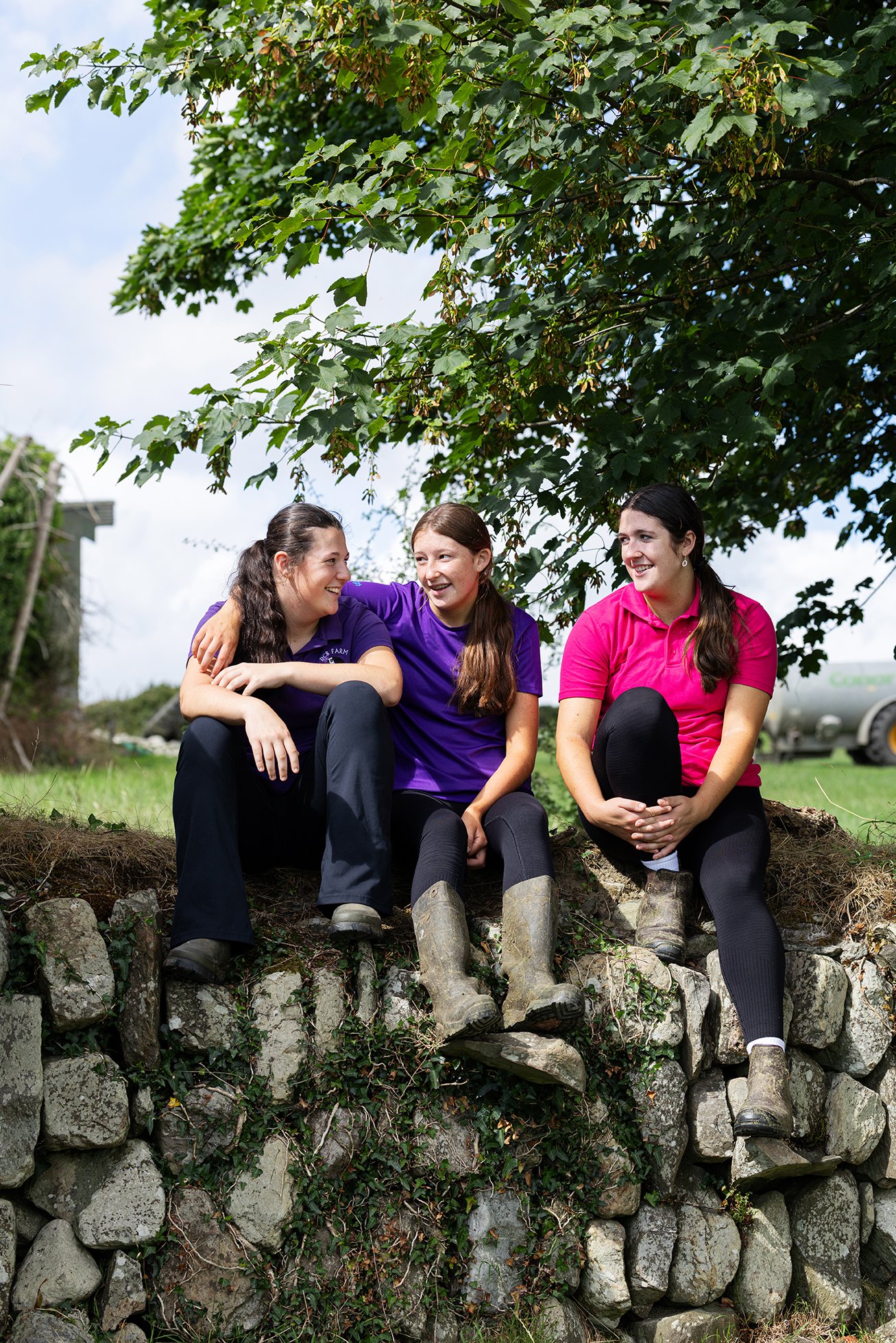
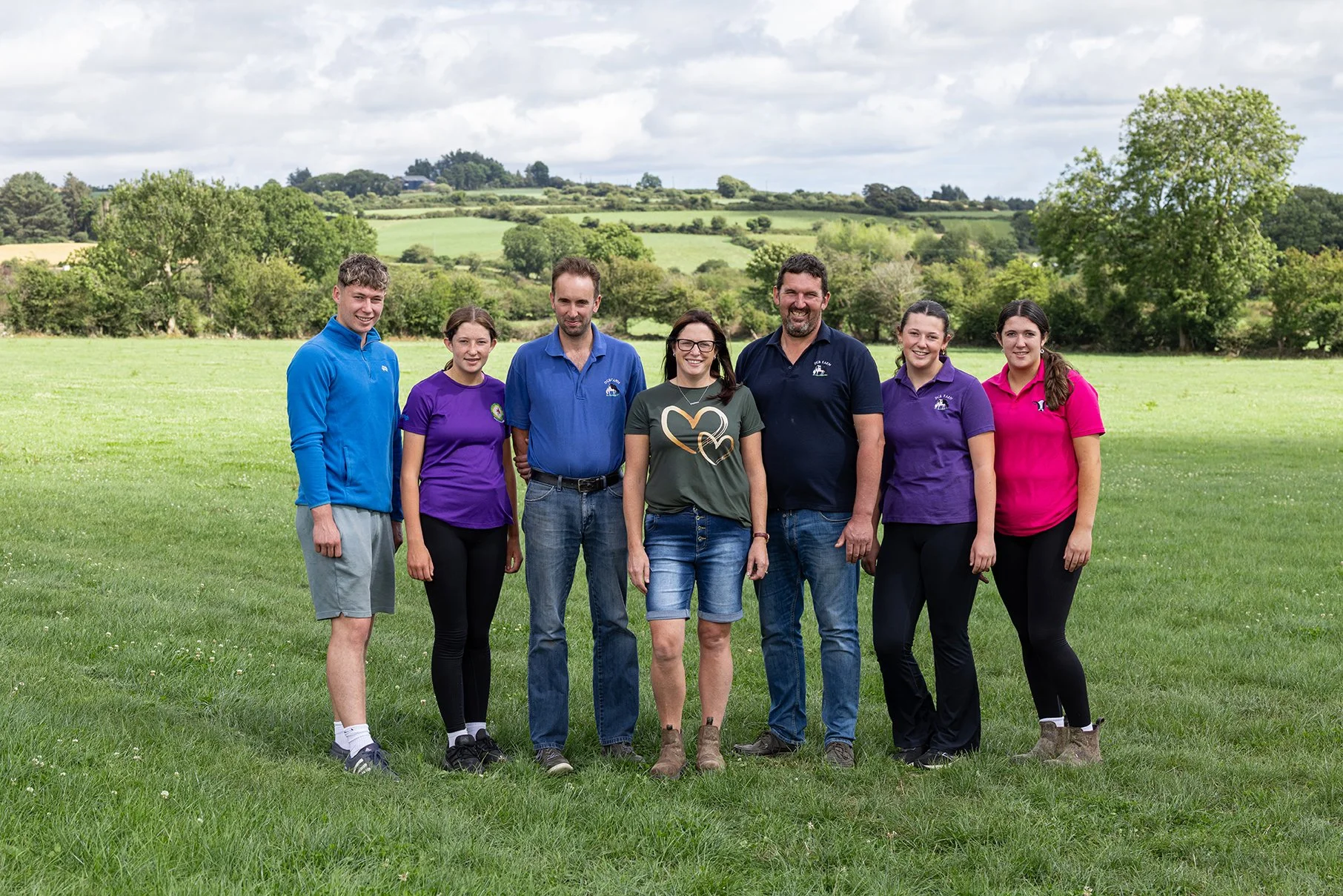
Each spring, Caroline Buttimer and daughters Rachel, Leah and Hannah take responsibility for feeding and bedding the young calves before they move to the automatic feeder. Matthew, the eldest at 17, helps with tractor work and milking during the busiest weeks. At weekends, all four children can be found helping with the milking.
Those calves are the herd of the future, but so too are the young people caring for them. On this farm, the next generation is not spoken about as some distant possibility, it is already at work.
Darren and Caroline milk 240 cows at Knockskeagh, five kilometres outside Clonakilty, on land that has been in the Buttimer family since the 1960s. Darren’s father, Ernest, and his four brothers came from Rossmore and purchased several farms within a ten-mile radius, establishing a family farming tradition that continues today. Darren joined the partnership in the early 2000s and took over the farm fully in 2007. His mother, Dianna, still lives just down the lane.
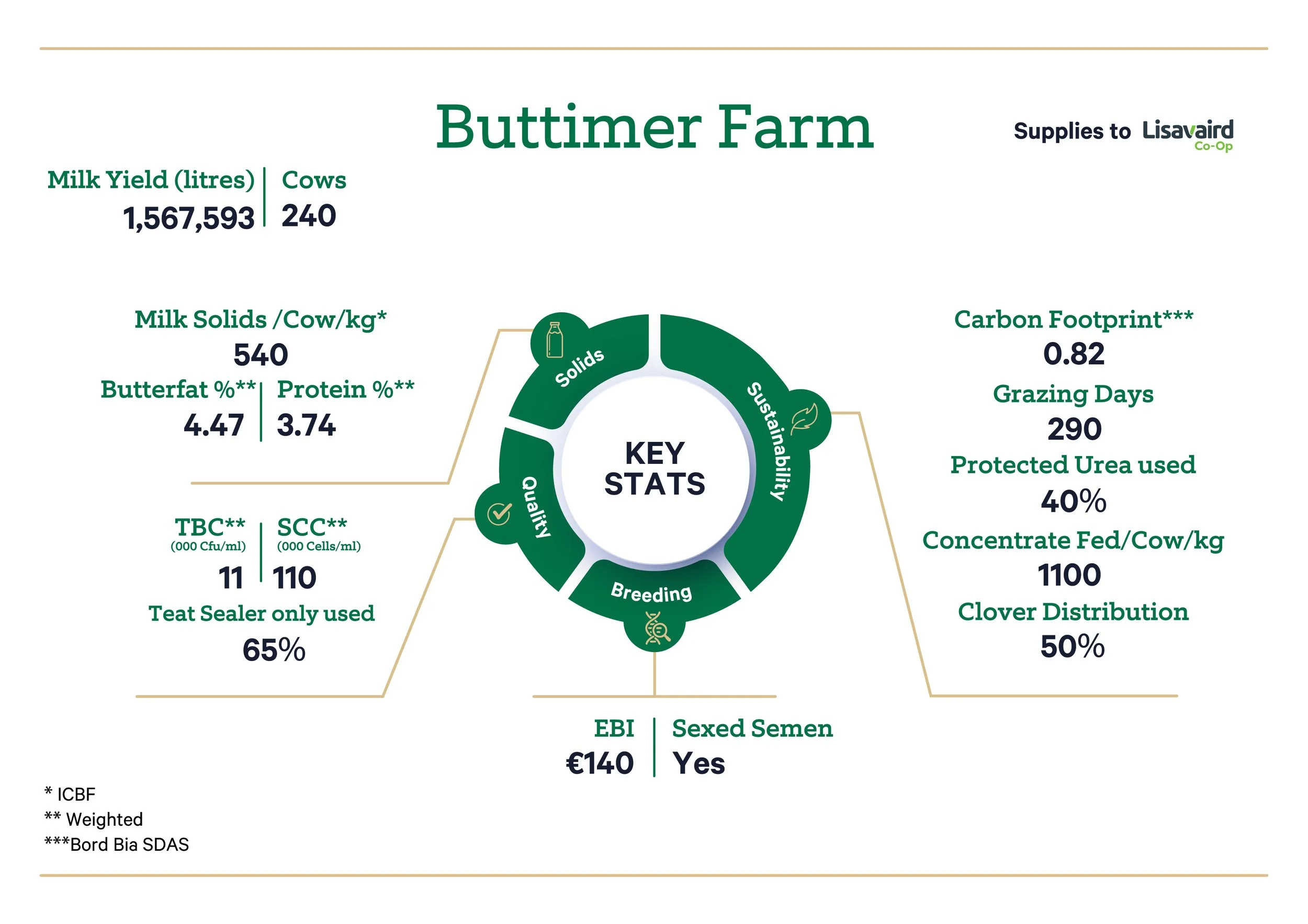
Today, the farm extends to 139ha, including a 75ha milking platform, and is run with the support of full-time farm manager Richard Roycroft. The herd produces approximately 6,400 litres and 540kg of milk solids per cow, at 4.47% fat and 3.74% protein, from around 1.1t of meal.
Behind those figures lies exceptional reproductive performance. The herd achieved a 366-day calving interval, with 77% calved within six weeks. Every one of the 45 replacement heifers calved between 22 and 26 months, while the ICBF report recorded no eligible cow failing to calve during the period. Of 243 calves born, only one was dead at birth. That is not luck. It is evidence of a system in which grassland management, breeding, nutrition and animal husbandry are working together.
The same disciplined approach is evident in the bulk tank. Recent results included a somatic cell count of 93,000 cells/ml, a total bacterial count of 10,000 and thermoduric counts as low as 95. Remarkably, these results are achieved without dump lines or cluster-flushing equipment in the 16-unit double-up parlour.
Instead, the Buttimers rely on well-executed routines: a daily hot wash, twice-daily peracetic acid treatment, regular descaling and liners changed twice a year. When a thermoduric problem emerged, Darren did not reach immediately for another piece of technology. He examined the cleaning system, introduced peracetic acid in the wash routine and solved the problem.
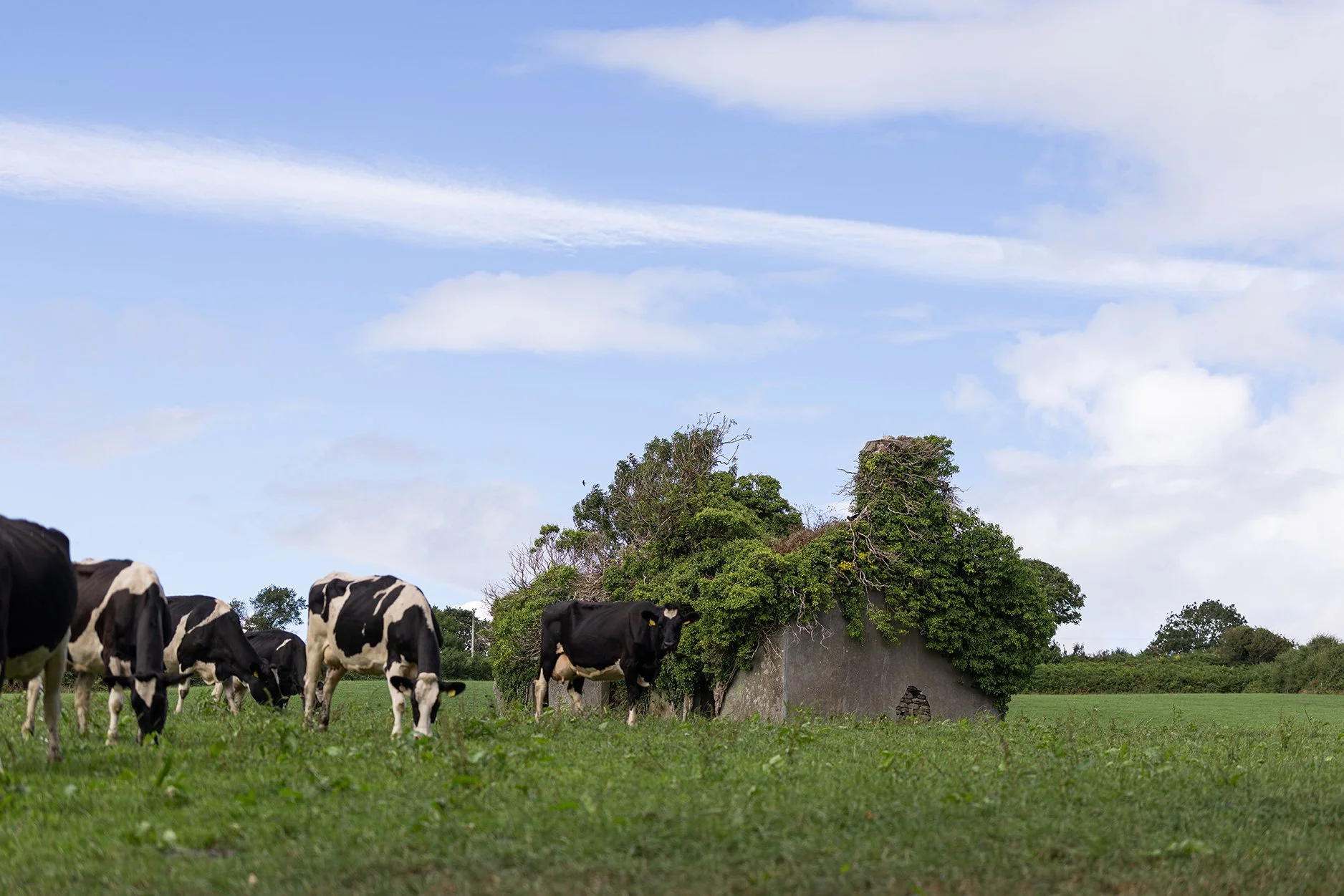
Milk recording five times a year, together with culture-and-sensitivity testing of mastitis cases, allows treatment decisions to be based on evidence. Cows that remain below 100,000 cells/ml and have no history of mastitis, approximately 65% of the herd, receive teat sealer only at drying off. Higher-cell-count cows are segregated and milked last, while persistent problems are not allowed to remain in the herd.
Animal comfort is treated with equal seriousness. Automatic scrapers operate every four hours, cubicles are cleaned and limed twice daily and cows’ feet are routinely inspected, footbathed and pared. Calf mortality to 28 days was just 2.5%, bringing the story back to those dry, carefully managed beds.
Outside the yard, the farm’s carbon footprint score of 0.82 reflects years of practical improvement. Cows spend approximately 290 days at grass, clover has been incorporated into half of the grazing platform and protected urea, LESS slurry spreading and GPS-controlled fertiliser application are used to reduce emissions and improve nutrient efficiency. Some 150t of lime was spread in 2025 to optimise soil fertility.
A 27kW solar array and battery system now generate electricity on the farm. Water troughs have been moved back from drains, roadways cambered away from watercourses and drains bunded under a water-quality improvement project. A Carbery biodiversity survey found that 14% of the farm is devoted to habitats, including an acre of marsh retained on the milking platform.
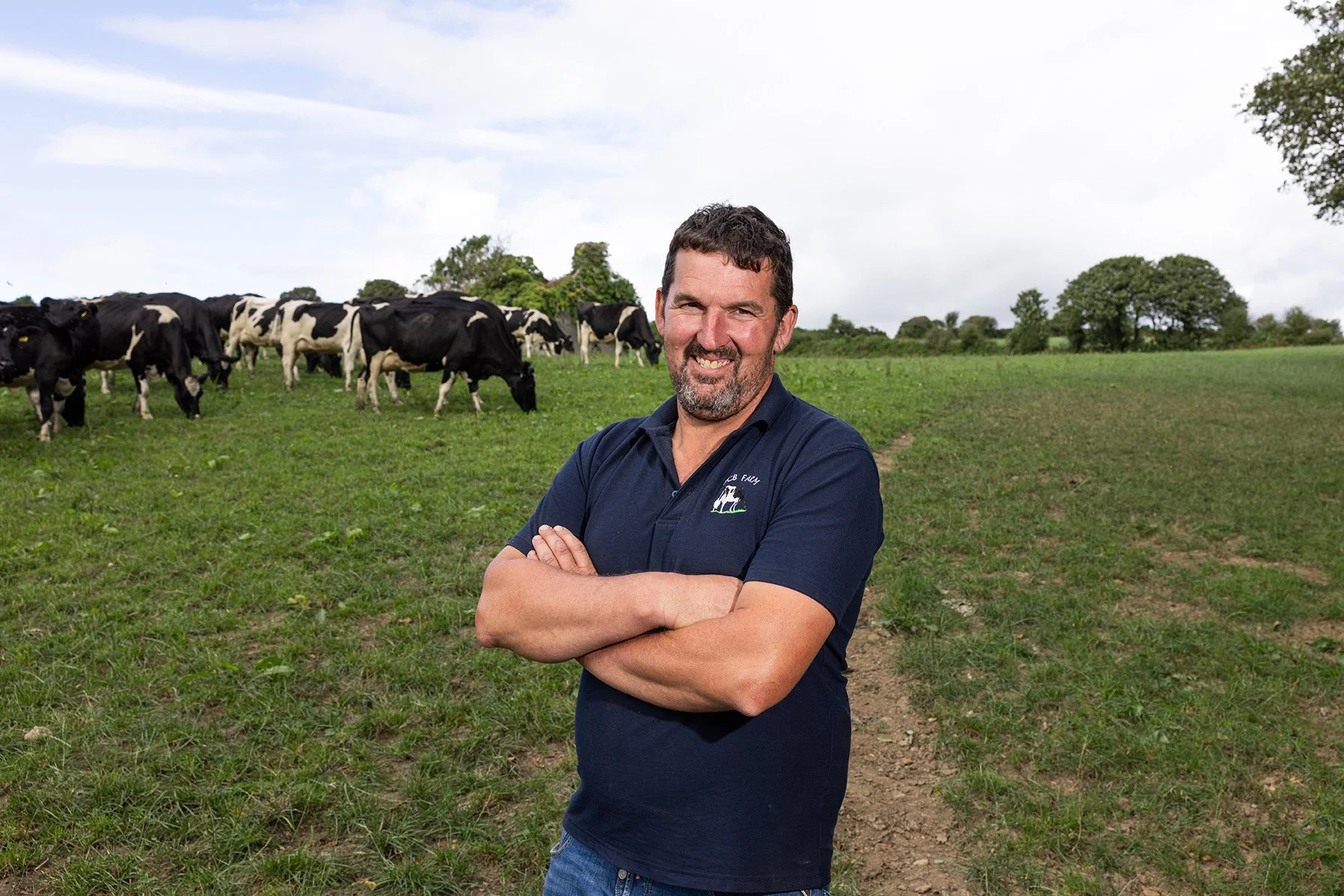
Yet perhaps the most impressive achievement is that this performance has not been allowed to consume family life. Milking is finished by 6.30pm so that evenings remain available for the family. Darren coaches underage GAA, while Caroline coaches girls’ soccer, plays with the local ladies’ team and serves on the board of Clonakilty Community College. The family takes a holiday each year and uses quieter weekends to get away together.
‘It’s a great quality of life,’ Darren says. ‘There are two busy seasons,
but once calving and silage are done, things ease up and you can take time off.’
That willingness to look beyond their own farm was demonstrated again when the Buttimers hosted an open day on 30 July, opening the gates and sharing their system with fellow farmers. It is an important ambassadorial quality: confidence in their own standards, combined with a readiness to help others improve.
Already the overall winners of the 2025 Carbery Milk Quality and Sustainability Awards, Darren, Caroline and their family now represent Lisavaird Co-op on the national stage.
They do so with distinction. This is a farm producing excellent milk, caring exceptionally well for its animals and reducing its environmental footprint, but its greatest achievement may be more enduring. The Buttimers have created a farm on which four young people are learning that high standards, family life and pride in farming can still belong together.
That is something of which the family, Lisavaird Co-op and the entire Clonakilty farming community can be justifiably proud.