There is a simple test of confidence in a farm: how willing are you to let people see it? At Kilmagemogue, outside Portlaw in Co. Waterford, Shane and Kate Fitzgerald have answered that question by opening the gate. Schoolchildren, agricultural students, fellow farmers and members of the public have all been welcomed onto the farm. More than 1,000 people came through the yard for an Agri Aware open day. And in March 2022 there was a rather more unusual visitor when the then Prince of Wales, now King Charles III, came to see at first hand the environmental measures being adopted on the farm.After demonstrations of protected urea, multi-species swards and low-emission slurry spreading, the royal visitor was brought into the Fitzgerald home for tea and scones. When he complimented them on their lovely home, Shane's response was wonderfully Waterford: “You don't have a bad gaff yourself.”
It is a good story, but perhaps the more important one is why so many people are invited here in the first place. Shane and Kate believe Irish farmers should be prepared to show people the reality of modern dairy farming, without greenwashing and without pretending that farming is something it isn't. Their argument is that if agriculture wants public trust, farmers themselves have to be prepared to open the gate. And Kilmagemogue is a farm that stands up well to being looked at.
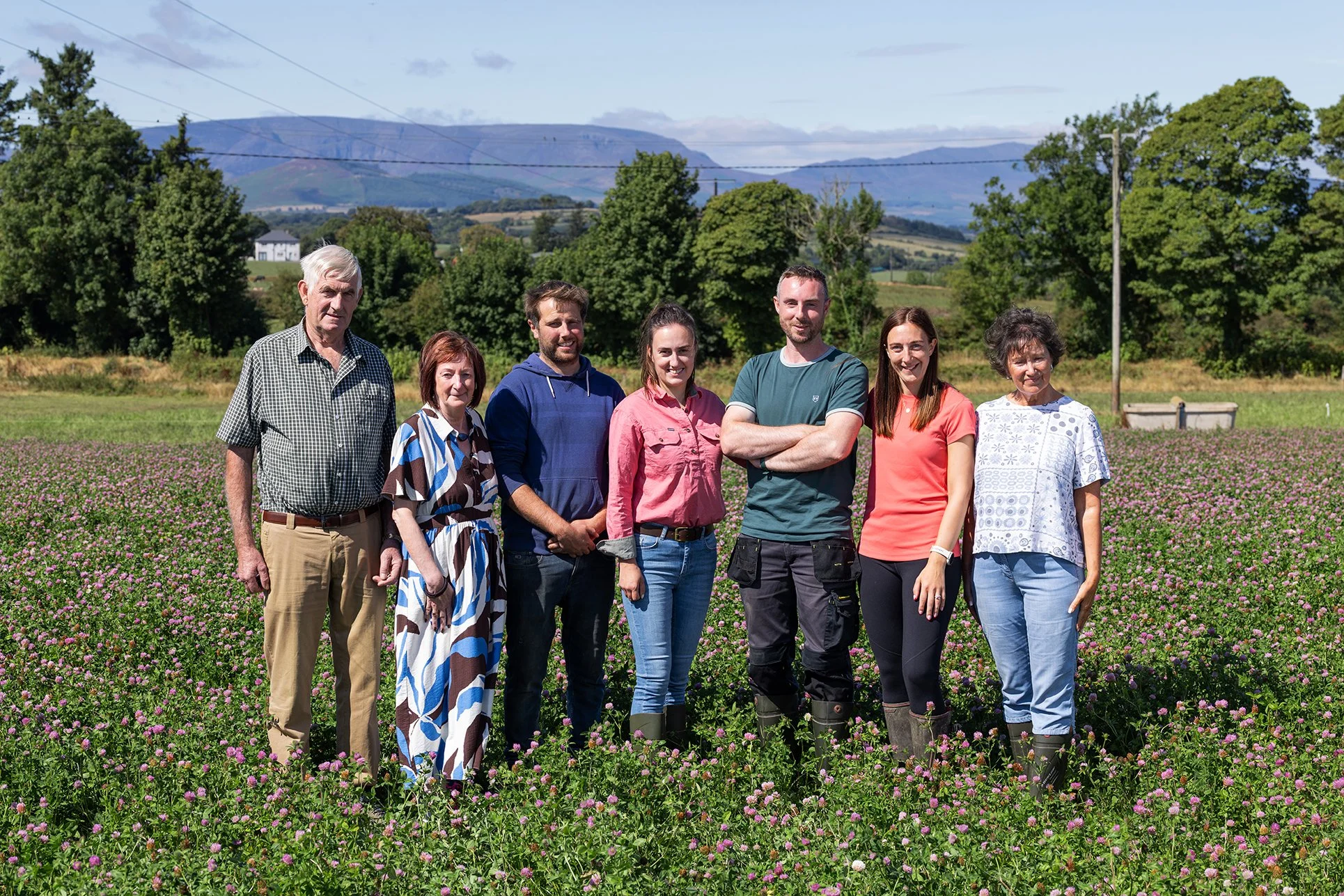
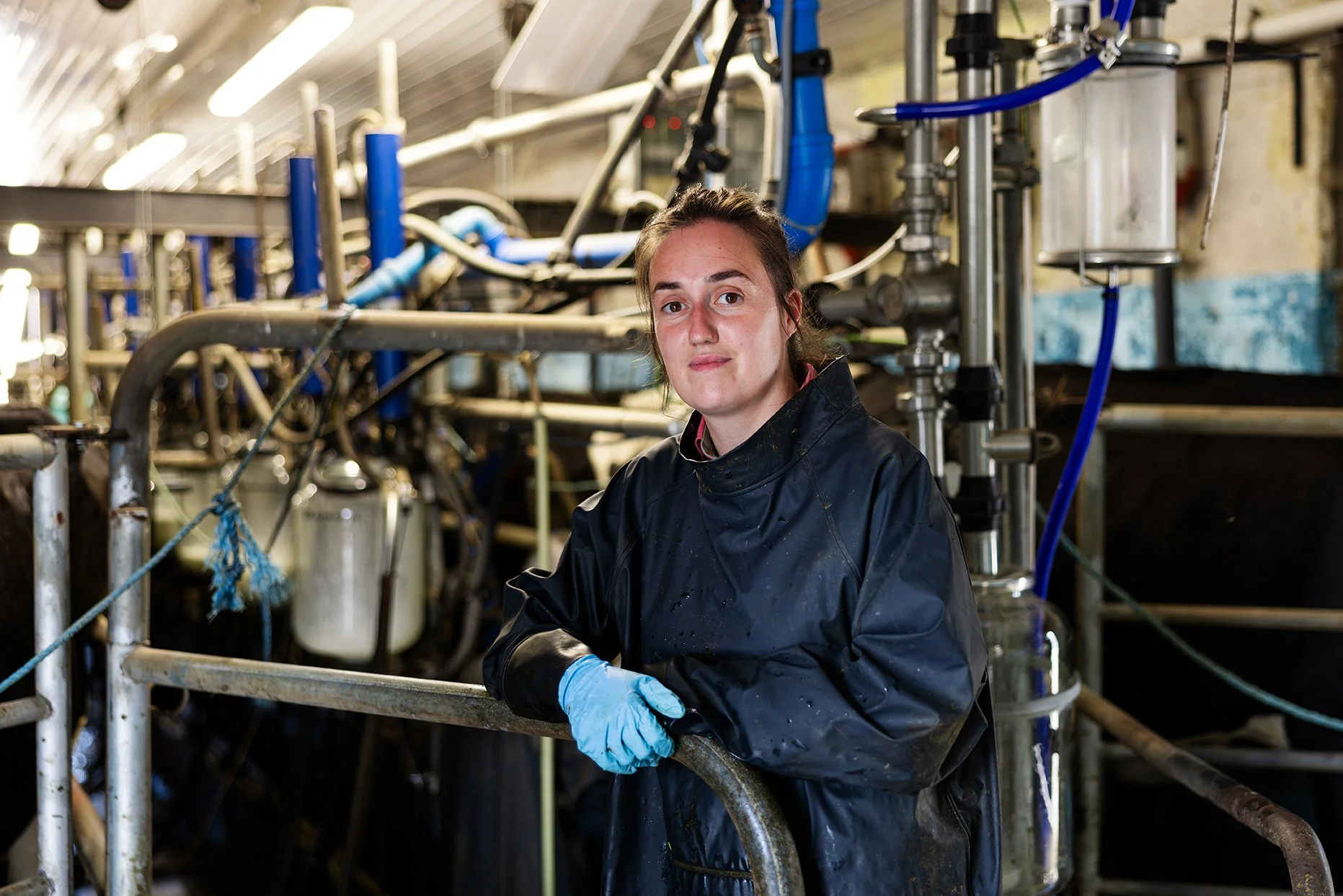
The farm is very much a family enterprise. Shane finished school in 2009 and studied business and accounting at Waterford Institute of Technology before working in Canada. He later completed the dairy business programme at Kildalton, including six months in New Zealand, and returned home full-time in 2016. At the time there were around 110 cows. Shane was 26 and his father John was 66. Rather than one generation simply replacing another, their different strengths complemented each other. The herd grew gradually by around 20 cows a year for five years, while John retained responsibility for much of the machinery work. He still does. Silage and reseeding are largely carried out in-house and John can still cover around 30 acres a day on the mower. There is something fitting about a highly progressive dairy farm where a Ford TW-10 can still earn its keep.
Kate's route into dairying was different again. Raised on a beef farm, she trained in childcare before working shifts with Abbott. She met Shane in 2019 and during Covid came to stay at Kilmagemogue “for two weeks”. She never left. Shift work initially gave her time to help with milking and calves. Dairy farming caught her interest, she completed her Green Cert by distance learning and immersed herself in discussion groups and Dairy Women Ireland. Her childcare background may also have found an unexpected second use: Kate has a particular enthusiasm for bringing schoolchildren onto the farm and explaining where their food comes from. Today, together with family friend John Foran, the Fitzgeralds have built a team capable of turning its hand to almost every job on the farm.
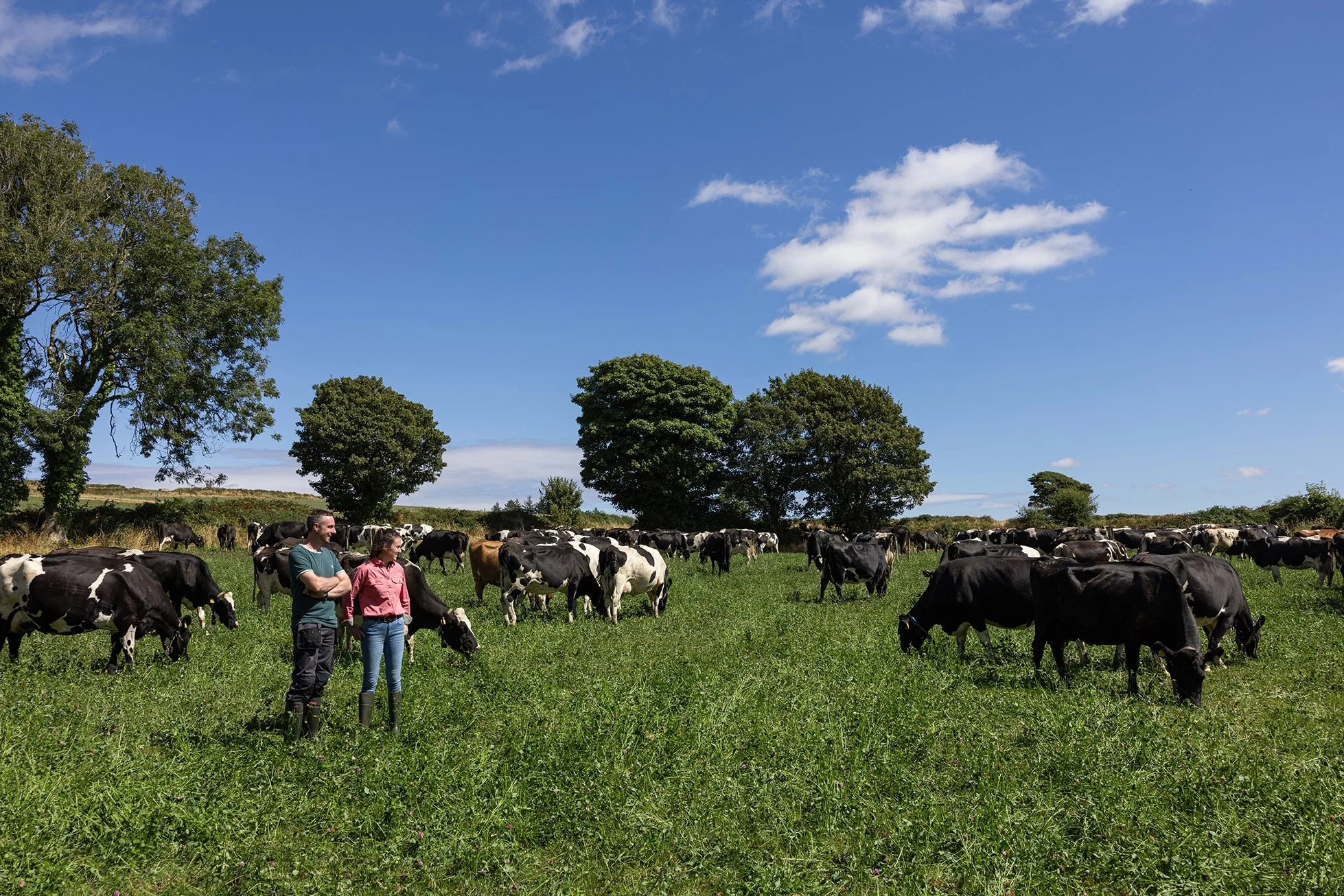
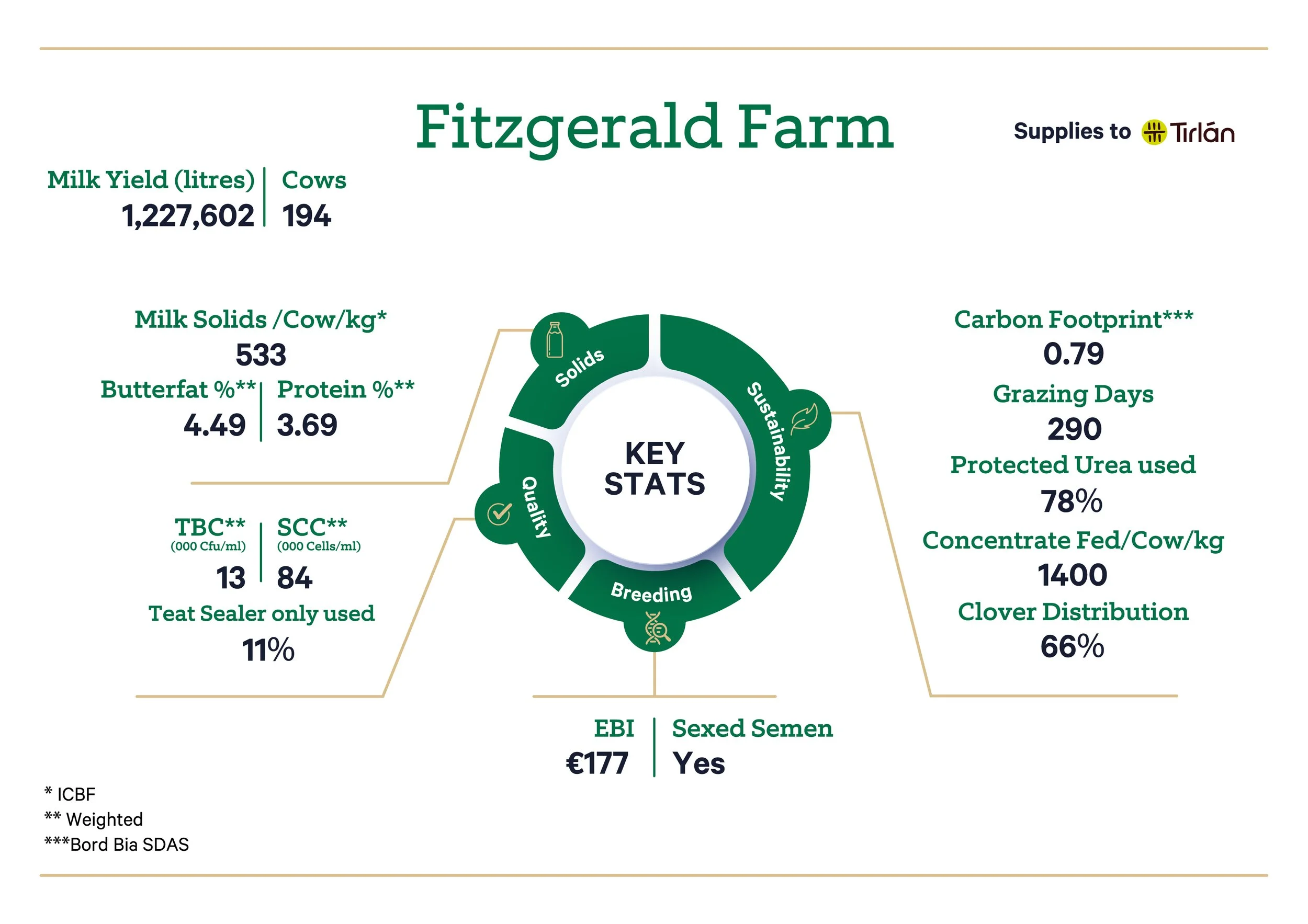
The herd is just over 200 predominantly Holstein Friesian spring-calving cows in a grass-based system, producing in the region of 530kg of milk solids per cow. But the impressive part of Kilmagemogue is not any single headline figure. It is the accumulation of small disciplines behind them. Grass is measured weekly, around 40 measurements during the year, and spring and autumn budgets are prepared on PastureBase. Milk quality is approached with the same attention to measurement. Milk recording is carried out regularly and Genocells technology has been used to identify the contribution individual cows make to bulk-tank somatic cell count. On one occasion, a single apparently healthy cow was found to be responsible for around 20% of the cells in the tank. Once identified, she could be managed.
High-SCC cows are followed up using the California Milk Test to identify the affected quarter, with culture and sensitivity used where appropriate. Selective dry-cow therapy has been practised for years, with a stringent 50,000 cells/ml threshold used in decision-making.
The dairy itself reflects the same mindset: spotless jars, disciplined washing routines and attention to the ordinary jobs that ultimately determine whether excellent milk leaves the farm every day. Technology helps, but it has not replaced stockmanship. SenseHub collars assist with heat detection and health monitoring and have already provided early warning of problems including an E. coli mastitis case and a displaced abomasum. Shane has also completed hoof-paring training so that a lame cow does not have to wait for attention.
Calves are bottle-fed to ensure adequate colostrum intake, while the recently constructed large calf house provides the air, light and space needed to give the youngest animals the best possible start.
The breeding objective is equally practical. Rather than simply chasing size or yield, Shane is moving towards a slightly smaller, robust cow of around 550kg that can efficiently turn grazed grass into high-value milk solids. It is efficiency rather than scale for scale's sake.
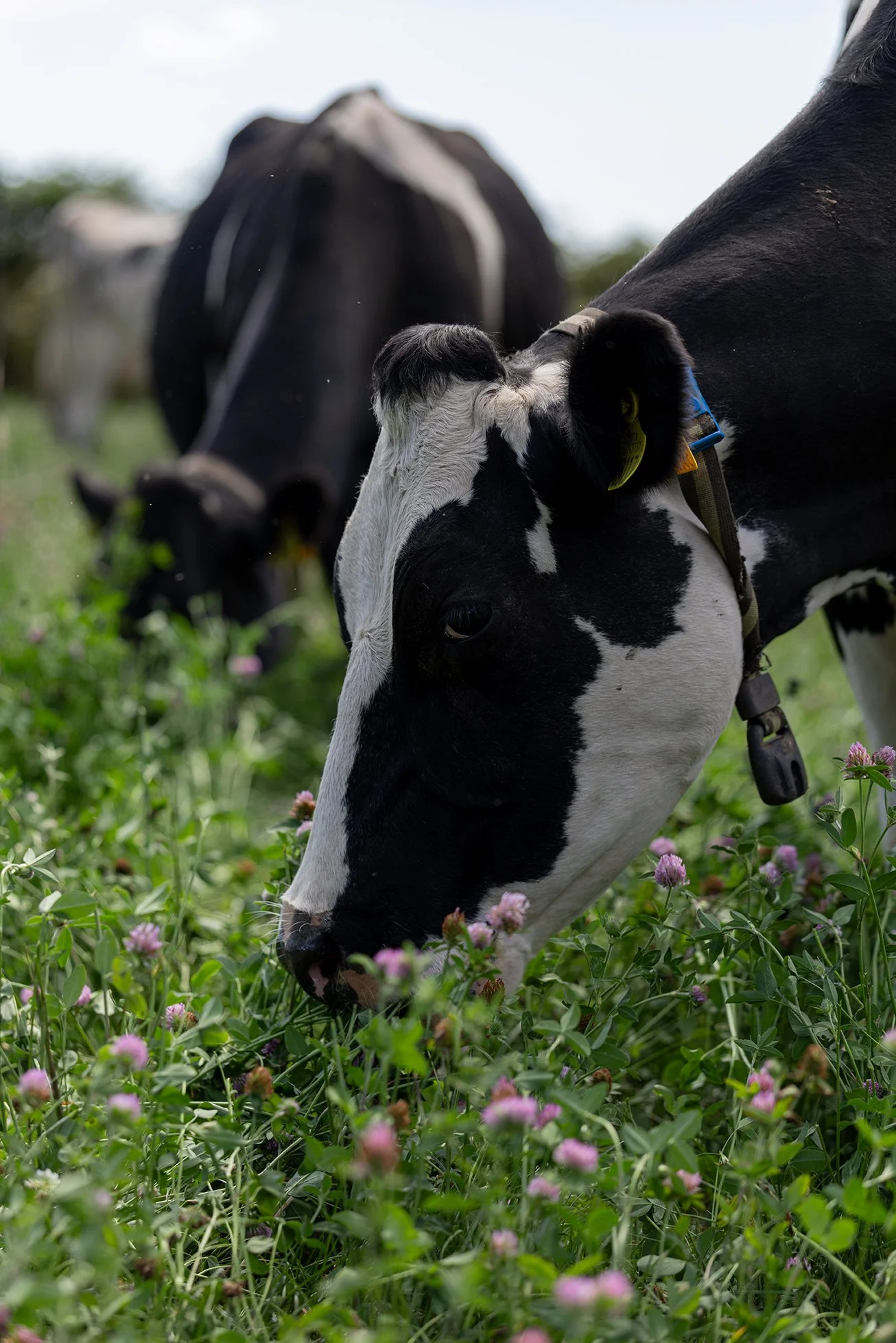
That philosophy carries into the environmental side of the farm. The Fitzgeralds have reached close to the number of cows the land can comfortably support. The next phase is therefore not about squeezing more animals onto the platform, but improving what they already have.
Multi-species swards have been trialled, clover is increasingly important, protected urea and low-emission slurry spreading are routine, and chemical nitrogen use has fallen substantially from previous levels. Watercourses have been fenced back beyond minimum requirements. New hedgerows have been planted. Field margins have been allowed to develop. A wildlife pond has been dug and owl boxes erected. Rat poison has been dropped because of the potential risk to birds of prey. A barn owl subsequently appeared on the farm's trail camera having set up home in one of the boxes, a small but satisfying endorsement of the approach.
For Shane and Kate, biodiversity is not about turning a productive dairy farm into a nature reserve. It is about accepting that the two can share the same ground. Their philosophy is summed up in one sentence: “You don't need every inch of land under production. Leave some for nature.”
It is particularly striking because attitudes have changed within a single generation. Shane remembers that in his father's time farmers were encouraged to remove hedges to improve agricultural efficiency. Today the Fitzgeralds are putting them back. Their definition of sustainability also extends beyond carbon and biodiversity. A farm must be economically viable, environmentally responsible and an enjoyable place to work. If one of those pillars disappears, they argue, the system will eventually fail. There is little point building a technically perfect farm if nobody in the next generation wants to live on it.
Perhaps the best expression of what the Fitzgeralds are trying to achieve is currently taking shape in the farmyard. The old milking parlour dates back to the 1970s and is being replaced by a high-specification 26-unit Dairymaster installation. Plenty of farmers install new parlours. The unusual feature at Kilmagemogue is what is being built alongside it: a viewing area running the length of the parlour, allowing visitors to watch cows being milked without interfering with either animals or operators. It says almost everything about this farm. Investment is intended to make the business more efficient and improve working conditions, but the Fitzgeralds are simultaneously designing the farm so that people from outside agriculture can come in and see what happens.
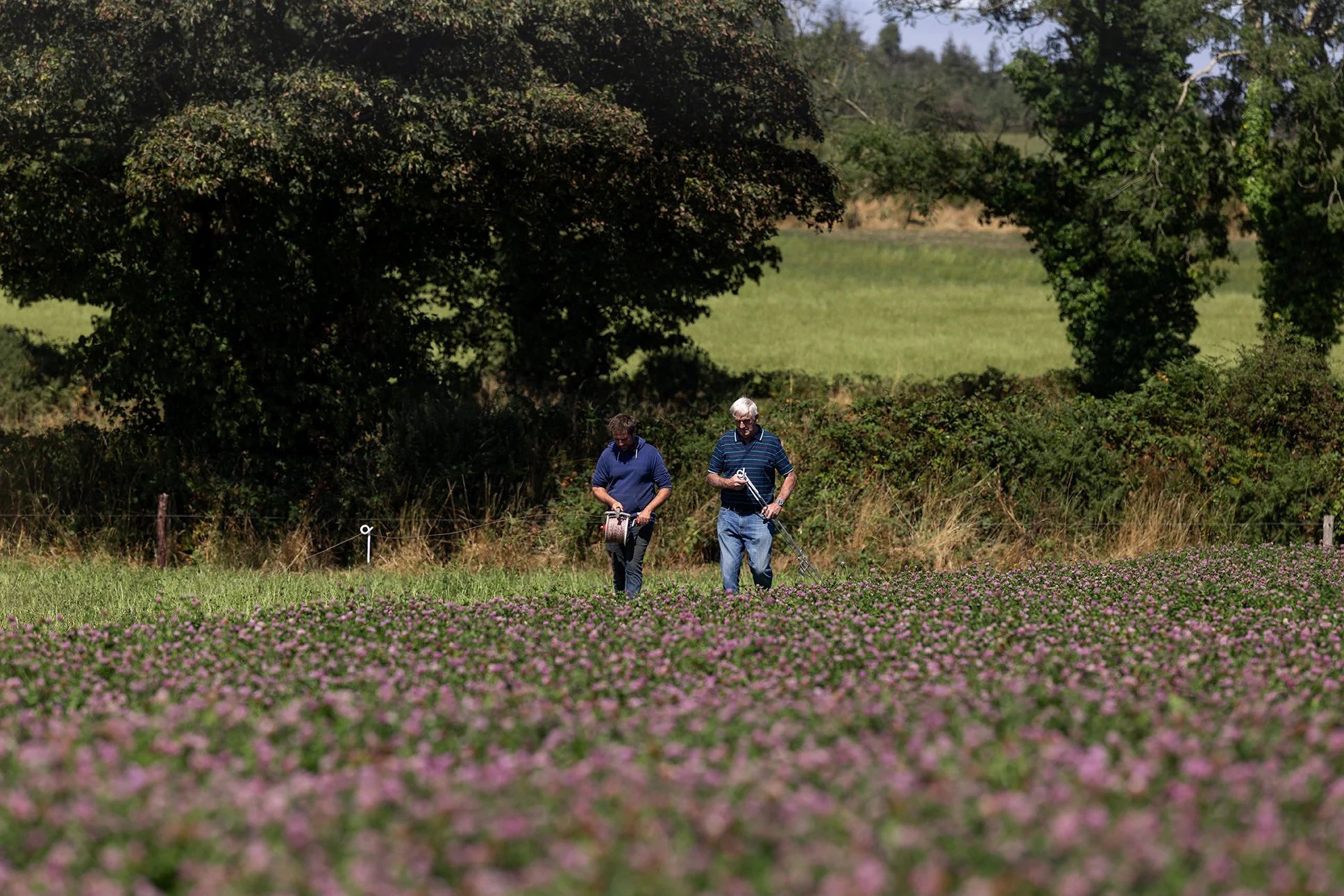
Shane first became conscious while at college of how little many people outside farming understood about food production. Kate has reached the same conclusion through her work with children and as an ambassador for dairy farming. Their response has not been to complain about the disconnect between farmers and consumers. It has been to invite people in. There is humor in the approach too. Shane once gave Kate a Grasshopper grass-measuring device as a Valentine's present; her brother presented her with a pink wheelbarrow as a wedding gift. Romance, Kilmagemogue-style.
But behind those stories is a serious ambition. The Fitzgeralds want a productive farm capable of supporting a family, producing excellent milk, treating animals well, reducing its environmental footprint and leaving room for nature. Just as importantly, they want people outside agriculture to understand how that is being achieved.
Being chosen as Tirlán's representative in the National Dairy Council and Kerrygold Quality Milk Awards is therefore about more than milk-quality figures. It recognizes a farm that is confident enough in what it does to allow others to judge for themselves. The new parlour will soon be milking cows. Alongside it, that viewing gallery will be ready for the next school group, farmer, consumer or perhaps even another unexpected visitor. At Kilmagemogue, the gate will remain open.