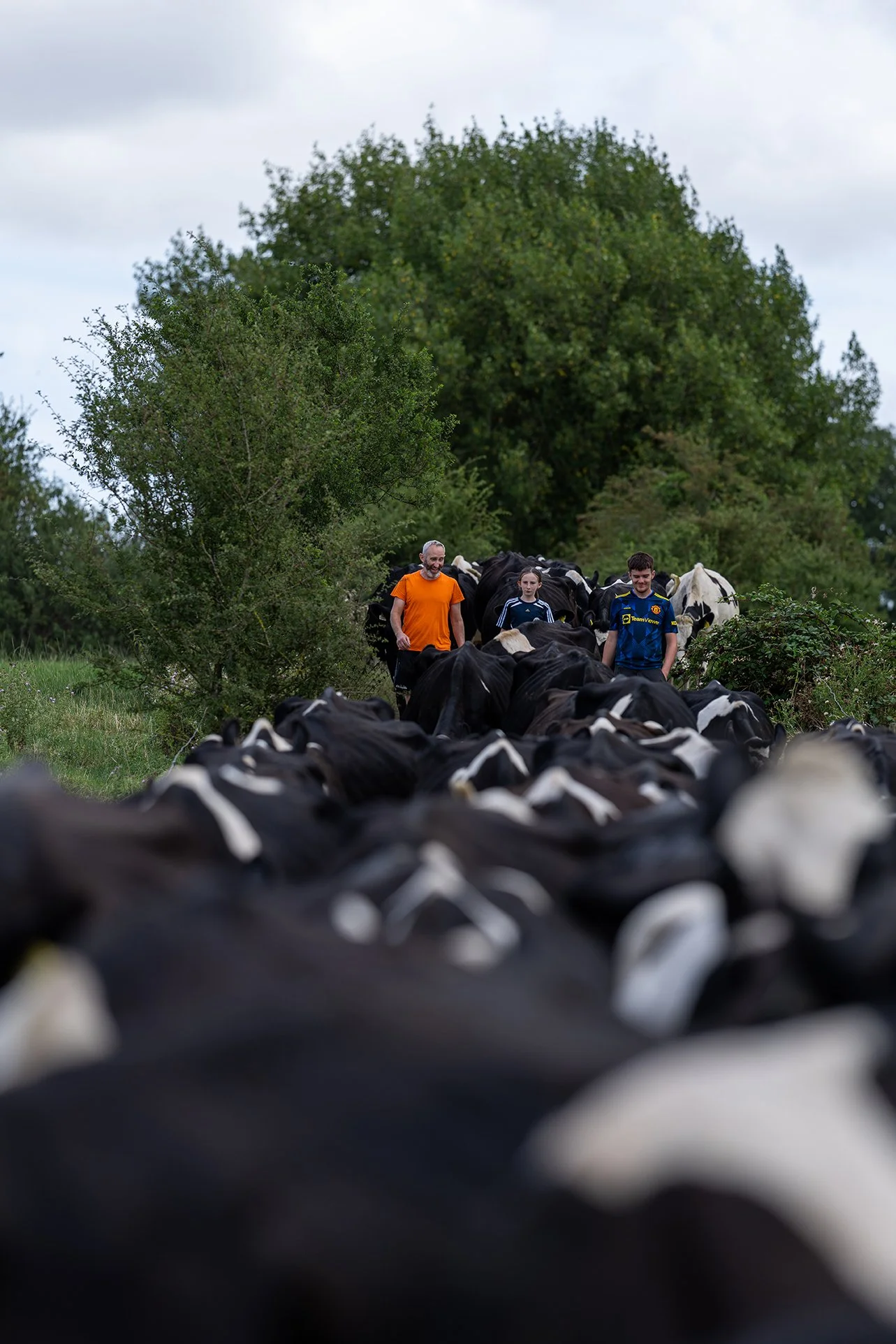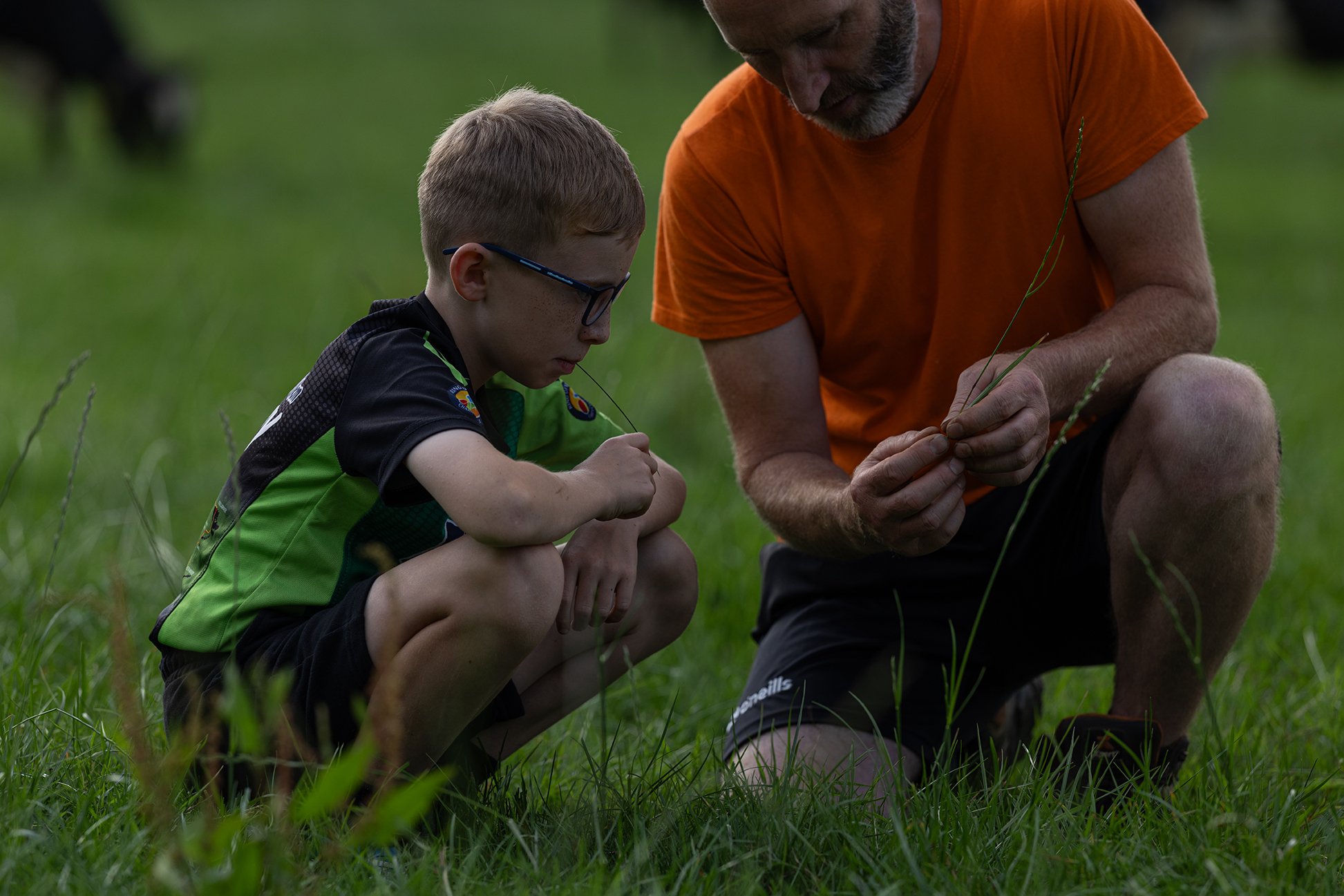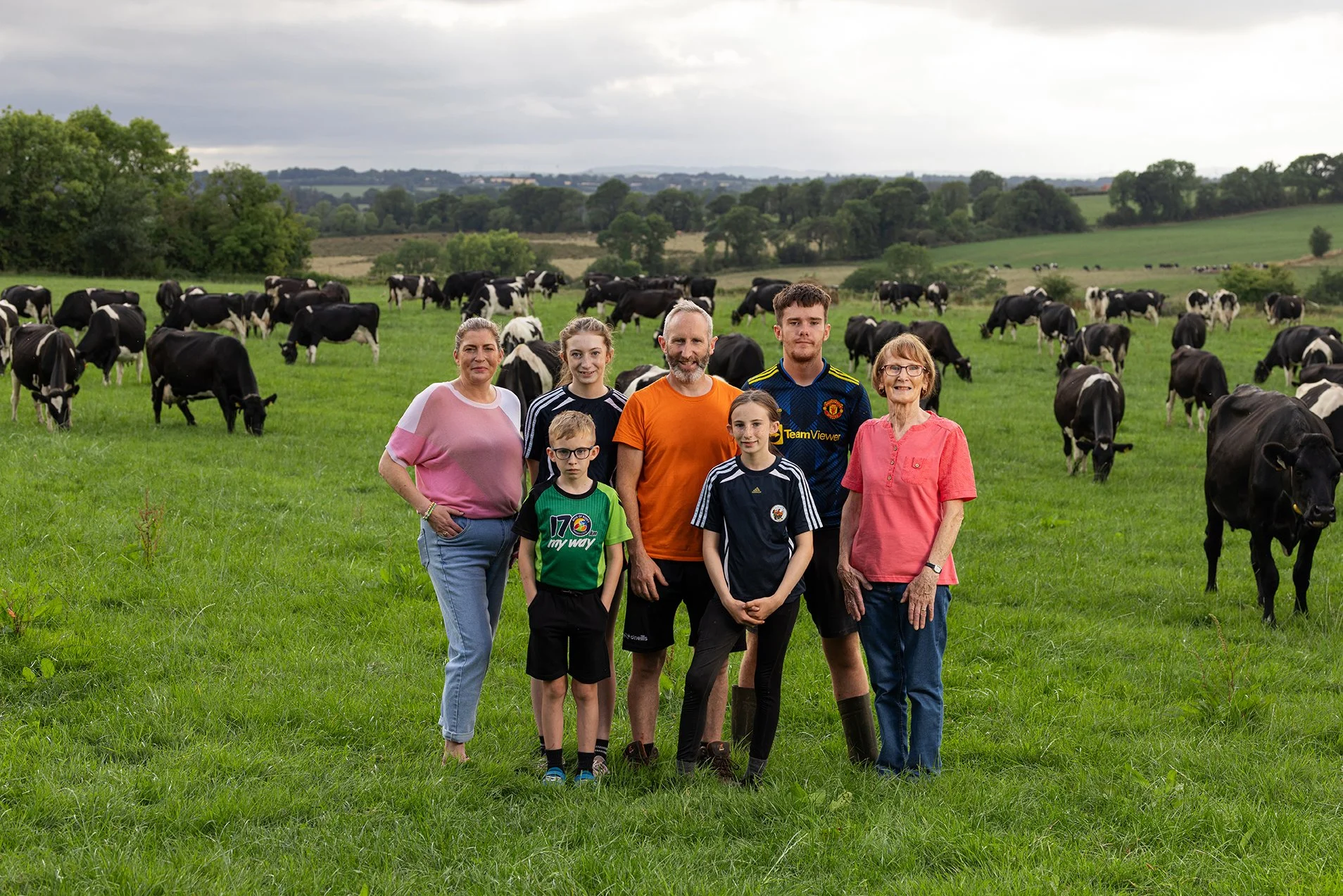
Kilbrin is not so much a village as a parish, a church, a GAA pitch and farms scattered across the rolling dairy country of Duhallow. Turn off the Kanturk road and follow one of the narrow cul-de-sacs all the way to the end and you arrive at Pat and Audrey Dennehy’s home place at Coolmahane.
It feels almost like an oasis of calm. The road stops here, the traffic has long since disappeared and the pace seems to change with it. Around the yard, 183 cows go quietly about their business and Pat Dennehy does much the same.
There is an easy, unhurried manner about Pat that quickly puts a visitor at ease. But spend a little time walking the farm with him and it becomes clear that the relaxed atmosphere has been earned. Behind it is a very well-organised farming system, built up over generations and refined year by year so that cows, grass, people and workload fit comfortably together.
Pat is not interested in change for the sake of change, nor does he measure progress simply by adding more cows. He wants good cows, good grass and good milk. He wants the work done properly, the environment around him protected and enough time left over to have a life beyond the farm gate. At 183 cows, he is happy with his scale and has no plans to expand.
That contentment should not be confused with a lack of ambition. At Coolmahane, ambition is expressed differently: in consistently good milk, better breeding, careful grassland management, healthier cows, cleaner water and in making the farm a little easier and more sustainable for the people who work on it. His North Cork Creameries milk advisor Darren Deasy probably captures Pat best: “Pat is excellent at the basics, and this is what makes him stand out.” There is quite a lot contained in that sentence.

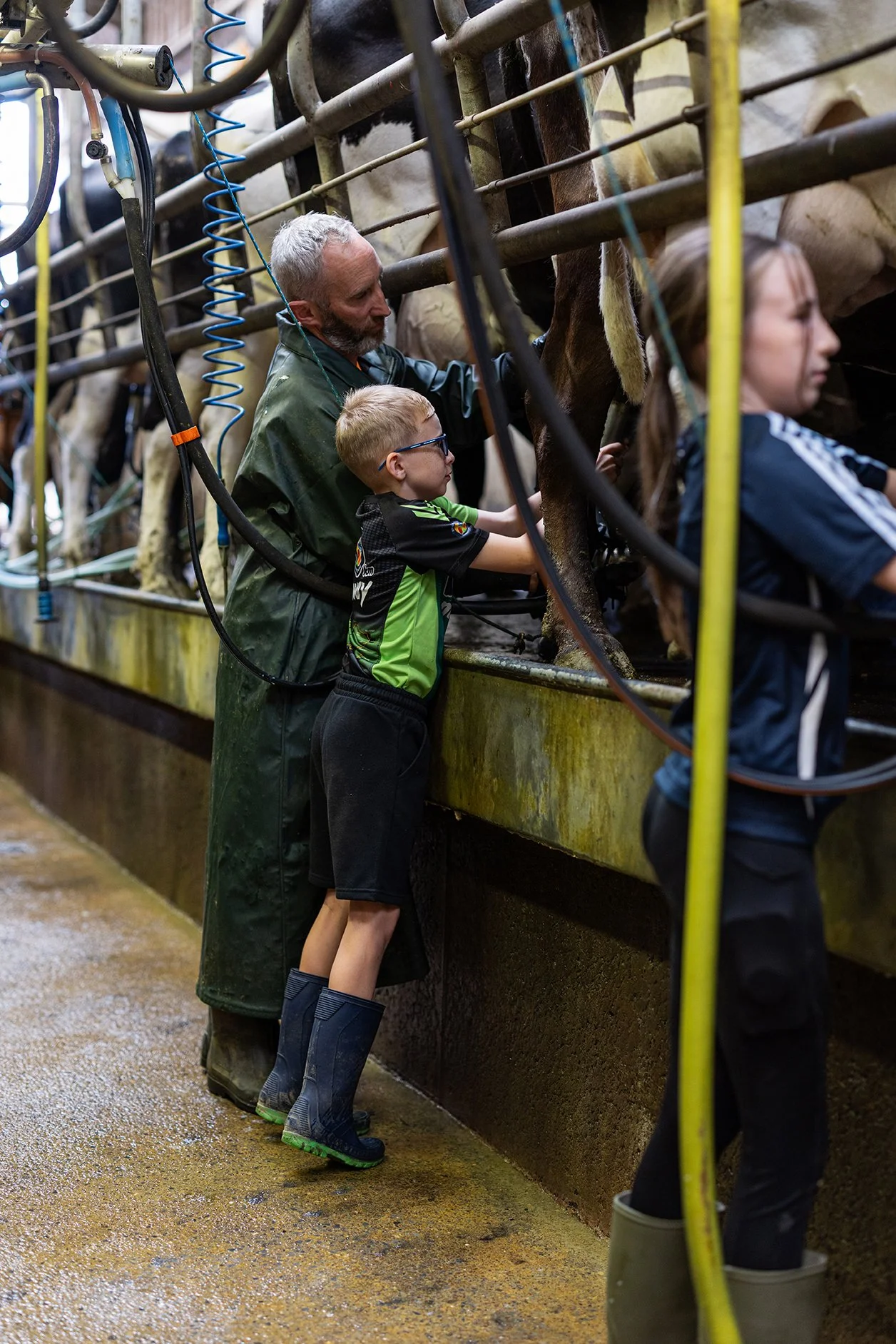
Pat's father and his uncle Michael farmed side by side for some 30 years, sharing a ten-unit milking parlour. Pat came home from agricultural college and joined them, and when Michael retired following a back injury in 2002, the family rented his land. A major change came in 2005 when Pat installed a 16-unit Fullwood parlour with automatic cluster removers and cluster flushing. More than 20 years later, he still calls it “the new parlour.” It is perhaps as good an introduction to the Dennehy farm as any. Things are changed when there is a good reason to change them, and once something works, Pat sees little point in replacing it simply because something newer has appeared.
Technology is nevertheless quietly embedded throughout the farm. Cow collars have transformed heat detection, a computerised calf feeder has taken much of the labour out of rearing the female. calves, GPS is used for fertiliser spreading and solar panels are being installed. Hot water is heated on night-rate electricity and pre-cooling water is reused for washing the parlour.
Every cow is stripped before the morning milking. Any suspect cow is checked with the CMT paddle and Pat also uses an AccuMast on-farm culture system to help identify the likely mastitis organism and inform the choice of treatment.
Milk recording is carried out seven times a year and Pat has gradually embraced selective dry-cow therapy. He started cautiously, gained confidence from the milk-recording data and has increased the proportion of cows receiving teat sealant alone. In 2025, 43% of the herd was dried off without an antibiotic with a threshold of never having a SCC greater than 100. It is antimicrobial stewardship stripped of jargon: use the information available, identify the cows that need treatment and don't use an antibiotic where one isn't required.
The results are visible in the bulk tank. Across 2025, monthly SCC remained remarkably consistent, while TBC was routinely in single figures or low double figures. The 172 cows milked that year delivered 78,724kg of milk solids, averaging 486kg of solids per cow. There is no magic ingredient. It is the accumulation of small jobs done consistently well.
There are 190 cubicles available for the milking herd, with additional accommodation elsewhere, so overcrowding is not part of the system. Cubicles are cleaned and bedded twice daily and automatic scrapers run every four hours. There is generous feed space, something Pat believes is particularly important for heifers and less dominant cows.
The breeding programme is similarly uncomplicated but precise. The herd has an EBI of €171, rising to €203 among the replacements. The entire herd is genotyped and bulls are selected for milk solids, fertility and health, while sexed semen is used selectively and Aberdeen Aengus beef sires account for most of the remaining matings.
Pat is also refreshingly open about the things that don't always go perfectly. Lameness can become an issue in a wet spring, so cows are picked up and pared promptly, and a new footbath has been purchased. Problems are acknowledged rather than disguised and then dealt with.
Perhaps the biggest surprise at Coolmahane is found beyond the farmyard. Pat has put considerable thought into what happens to water as it moves across the farm. Watercourses have been fenced, roadways cambered away from them and water bars installed to divert runoff onto fields. Below the yard, runoff is directed through vegetated bunded drains planted with hundreds of willow trees, designed to intercept nutrients before water moves onwards. Pat intends adding more willow and reeds. A pond dug in 2024 has already attracted ducks and herons, while foxes, rabbits, hares and pheasants are regular visitors. Elsewhere, an old farm roadway that is no longer needed has simply been fenced off and allowed to return to nature. There is something appealingly Dennehy-like about that last measure. Sometimes environmental improvement doesn't require building anything. Occasionally the best intervention is to leave a piece of ground alone.
Slurry is tested so Pat knows the nutrient value of what he is spreading, LESS is used throughout, soil is tested every three years, protected urea has replaced conventional urea and clover is now incorporated into around 60% of the grazing platform. The environmental work isn't separate from farming here. It is simply part of farming the place properly.
Perhaps Pat's most interesting decision concerns the future. Ask many farmers about their five-year plan and expansion quickly enters the conversation. Pat's answer is different. “I'm happy with the scale I'm at and have no plans to expand.” He would like to employ a full-time person if the right individual comes along, and he intends to keep improving buildings and infrastructure. not to milk substantially more cows, but to make the existing farm easier to run. That distinction matters. The cows were at grass for around 250 days last year, the farm is producing a substantial volume of high-quality milk, and Pat wants a system that remains manageable rather than one that consumes the family operating it. Evening milking starts at 3.30pm with the aim of having all the yard work finished by six. Relief milkers are used during the summer where possible. Contractors take pressure off at busy times. Efficiency at Coolmahane isn't measured only in litres or kilograms of milk solids. Sometimes it is measured in getting out of the yard in time for an under-10 hurling match.
That matters because Pat is heavily involved beyond the farm gate. He coaches under-10 hurling and football and helps a local group maintain the church and graveyard grounds. Behind the relaxed rhythm of Coolmahane is very much a family effort, with Audrey at the heart of family life and supporting Pat and the farm in all the ways that keep a busy dairy household running. Their children are already familiar faces around the yard: Máire is an aspiring champion Irish dancing, Lily plays soccer and tends to her own pony which she rides around the farm, and Micheál is a budding hurler and footballer.
Pat's 81-year-old mother remains close enough to be summoned if needed to help out, although Pat jokes that he tries to keep her for emergencies only.
His niece Aoife and nephew Mark have also been important members of the team, particularly for relief milking. Aoife's farming education has already travelled considerably further than Coolmahane: after helping on the farm during Covid and sitting her Leaving Cert, she subsequently went milking cows in New Zealand.
And when summer allows, the Dennehys escape to their caravan in Kerry.
There is no grand succession plan being imposed on the children either. “If they are interested, I will help them as much as I can,” Pat says. “And if they have no interest, that will be fine with me as well.” It may be one of the most revealing things he says.
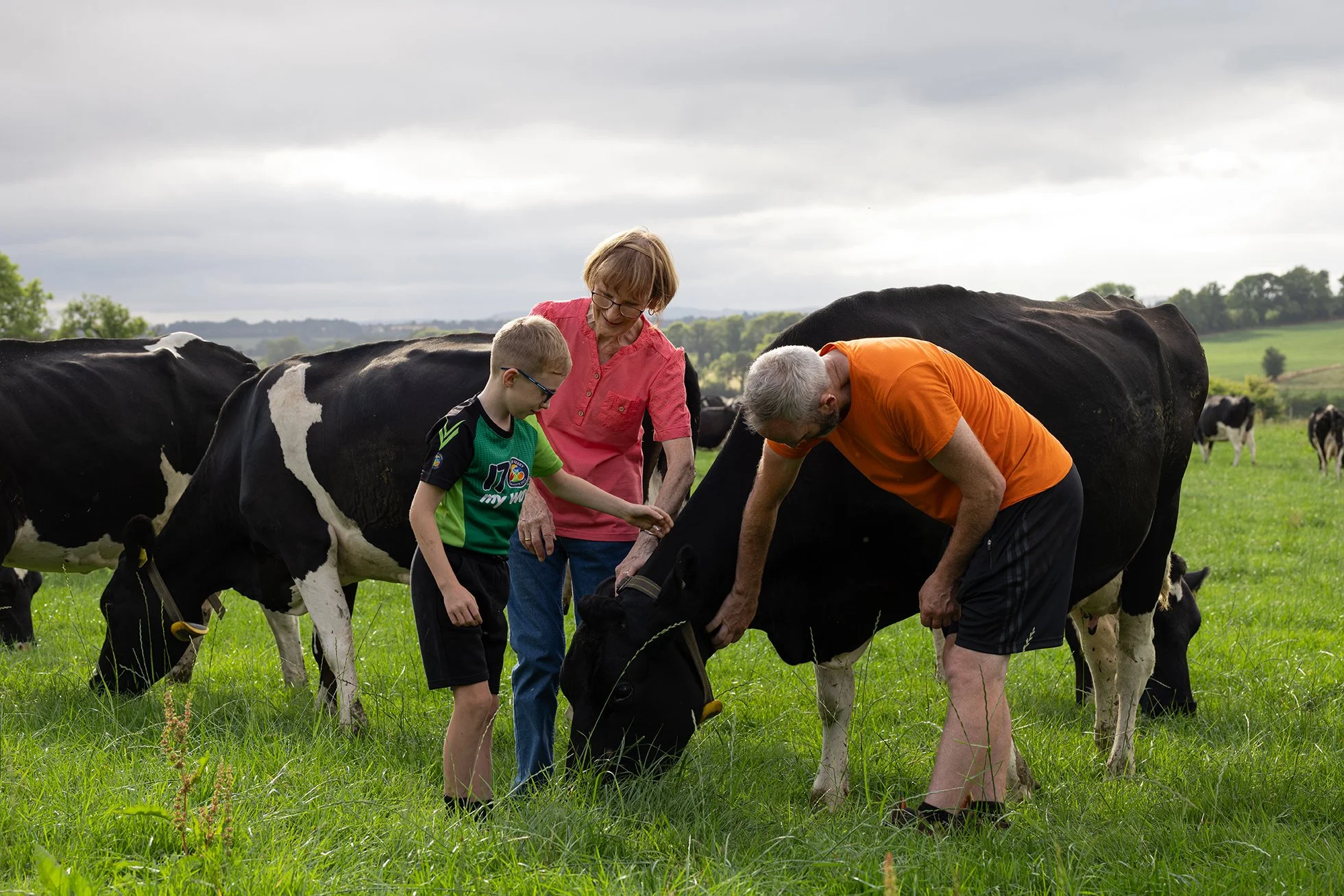
Pat believes the family farm remains one of Irish agriculture's great strengths. His own experience explains why. His father and uncle farmed together. His own family now contributes. He rents 50 acres from a neighbouring farmer, and around him are friends and neighbours who understand that farming occasionally produces a problem that cannot wait until morning.
As Pat puts it, they are people “who can be called upon if help is needed at any hour of the day or night. It's a real community.”
North Cork Creameries describes him as optimistic, positive and a pleasure to deal with. Spend time at Coolmahane and those words make sense.
This is not a farm trying to be something it isn't. There is no obsession with scale and no attempt to turn every innovation into a headline. Instead, there is a quiet confidence in doing ordinary things exceptionally well, looking after cows, producing good milk, minding the land, improving what needs improving and still finding time for family and community.
At the end of the lane, the peace is the point. It is what a farm sounds like when everything is done right.